

WeVote

Bill

Bill

HR 8149

Agricultural Access to Addiction and Mental Health Care Act

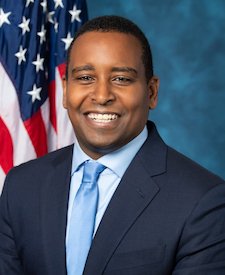
119th Congress Introduced by Joe Neguse and 1 co-sponsor

The bill directs a study on how accessible addiction and mental health care is for farmers and ranchers, aiming to identify barriers and propose improvements.

Referred to the Subcommittee on Commodity Markets, Digital Assets, and Rural Development.
0
WeVote Research Nonpartisan
Bill Summary · HR 8149

Overview

  • Bill: H.R. 8149
  • Session: 119th Congress
  • Title: Agricultural Access to Addiction and Mental Health Care Act
  • Purpose: Requires the Secretary of Agriculture to study how accessible addiction and mental health care providers and services are for farmers and ranchers affected by drought, extreme weather, commodity market instability, and consumer misinformation. The act also explores potential funding and programmatic improvements to expand access.

What the bill would do

  • Mandate a study by the Secretary of Agriculture (acting through the Director of the National Institute of Food and Agriculture) on accessibility to addiction and mental health care for farmers and ranchers and their families.
  • Topics the study must cover:
    • Availability and accessibility of providers and services trained to serve agricultural communities.
    • Barriers faced by farmers and ranchers (financial, geographic, cultural, etc.).
    • Best practices and replicable programs at state/local levels, including:
    • Hiring/training providers with agriculture-sector expertise.
    • Cultural competency training for providers.
    • Certificate programs for paraprofessionals/coaches to offer peer support.
    • Rural youth/young adult curricula.
    • Expanding telehealth/telemedicine in rural areas.
    • Outreach to reduce stigma and raise awareness of mental health issues.
    • Coordination between mental health providers and agricultural organizations.
    • Evaluation of program effectiveness.
    • Recommendations to improve access.
    • Feasibility of funding up to six reimbursable therapy sessions per eligible provider through the Farm and Ranch Stress Assistance Network (under the Farm Bill provisions, 7 U.S.C. 5936).
  • Collaboration: The Secretary must consult with federal agencies, state departments of agriculture, mental health organizations, agricultural groups, and other stakeholders.
  • Timeline: A final report due to the House Committee on Agriculture and the Senate Committee on Agriculture, Nutrition, and Forestry within 180 days after enactment.
  • Funding: Authorizes $1,000,000 for each fiscal year 2026 through 2029 to carry out the study (total across four years: $4 million).

Who is affected

  • Primary beneficiaries: Farmers and ranchers, agricultural workers, and their family members who may experience mental health or substance-use challenges.
  • Stakeholders involved in the study: Federal agencies (Dept. of Agriculture and related agencies), State agriculture departments, mental health organizations, agricultural organizations, rural health providers, and educational/training institutions.

Key provisions and provisions’ implications

  • Study scope emphasizes rural and agricultural-unique barriers to care, including cultural factors and stigma.
  • Emphasis on leveraging telehealth and expanding local and culturally competent care.
  • Potential programmatic implications if the study identifies viable models: possible replication of best practices at federal, state, and local levels; potential expansion of training pipelines and reimbursement of therapy sessions via the Farm and Ranch Stress Assistance Network.
  • Financial authorization is limited to a dedicated study budget ($1 million/year) for 2026–2029; does not itself create a broad new entitlement or ongoing funding beyond the study period, unless future legislation appropriates more.

Procedural and timeline notes

  • Introduction date: March 27, 2026.
  • Committee referrals: House Committee on Agriculture; subcommittees on Conservation, Research, and Biotechnology; and on Commodity Markets, Digital Assets, and Rural Development.
  • Report due: Within 180 days after enactment.
  • Substantive outcome: A non-binding study report with findings, best practices, recommendations, and feasibility assessment for reimbursable therapy sessions under existing Farm Bill authority.

Potential impact (implementation perspective)

  • The bill could illuminate gaps in rural mental health and addiction care for farmers, leading to targeted recommendations and potential policy actions.
  • If recommendations are adopted, possible outcomes include:
    • Expanded training and cultural competency initiatives for providers serving agricultural communities.
    • Increased telehealth capacity in rural areas.
    • UI/UX improvements in access programs and stigma-reduction efforts.
    • Consideration of broader funding for reimbursable mental health services for farm families via the Farm and Ranch Stress Assistance Network.

Compiled from official sources — confirm details with the bill’s official record.

Sign in to ask a question.