

WeVote

Bill

Bill

SB 327

Affordable Housing Payment In Lieu of Taxes Expansion Act

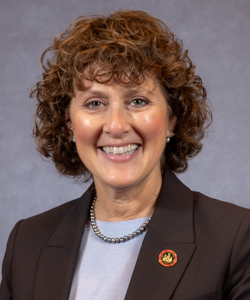
2025 Regular Session Introduced by Shelly Hettleman

Baltimore counties may negotiate PILOTs with rental-property owners to substitute property taxes with a payment in exchange for at least 25% of units affordable for 15+ years.

Approved by the Governor - Chapter 106
0
WeVote Research Nonpartisan
Bill Summary · SB 327

SB 327 — Affordable Housing Payment In Lieu of Taxes Expansion Act (Ch. 106, 2025)

Status: Approved by the Governor (Chapter 106). Effective date: June 1, 2025. Applies to taxable years beginning after June 30, 2025.

Purpose / Intent

The act authorizes Maryland counties to enter into negotiated payment‑in‑lieu‑of‑taxes (PILOT) agreements with owners of rental housing properties in exchange for exempting those properties from county real property taxes, provided the owner commits to maintain a specified share of units as affordable housing for a multiyear period. The aim is to expand affordable rental supply by creating a local tool that incentivizes the preservation or creation of below‑market units while allowing counties and owners to negotiate alternative revenue arrangements.

Key provisions

  • Eligible property: real property used for rental housing.
  • PILOT option: A county governing body may agree with a property owner to substitute a negotiated payment for county property tax (i.e., a PILOT).
  • Affordable unit requirement:
    • Owner must commit to maintain at least 25% of the rental units as “affordable dwelling units” for a minimum term of 15 years. (The statute permits counties to require a higher percentage.)
    • “Affordable dwelling unit” is defined in cross‑referenced law as housing affordable to households earning 60% or less of area median income; “affordable” means housing costs do not exceed 30% of household income.
  • Exemption mechanics: When the agreement is in place and requirements met, the described property may be exempt from county property tax; instead the owner pays the negotiated PILOT amount.
  • Local discretion: Counties are authorized (but not required) to adopt and negotiate PILOT terms and may set higher affordability thresholds than the statutory minimum.

Who is affected

  • Property owners/developers of rental housing who may seek PILOT agreements to reduce or replace county property tax liability.
  • County governments, which gain a new discretionary tool to secure affordability in exchange for foregone property tax revenue and may negotiate PILOT amounts and terms.
  • Renters/households at properties that enter PILOT agreements and are designated as affordable units (households at ≤60% AMI).
  • Potentially small businesses: fiscal note indicates minimal direct impact.

Fiscal and policy impacts

  • State fiscal effect: None (no State revenue or expenditure impact identified).
  • Local fiscal effect: County property tax revenues may decrease beginning in FY 2026 to the extent properties enter into PILOTs. The magnitude depends on (a) how many properties participate, (b) the assessed values involved, and (c) the negotiated PILOT payments — negotiated PILOTs are expected to mitigate revenue loss.
  • Small Business Effect: Minimal (per the Department of Legislative Services fiscal note).

Implementation / Timeline

  • Law effective June 1, 2025.
  • Applies to taxable years beginning after June 30, 2025.
  • Counties must adopt or use existing local authority to enter into PILOT agreements; agreements must satisfy the statutory affordability percentage (minimum 25%) and minimum 15‑year term.

Related/legislative notes

  • Cross‑filed with HB 390.
  • The underlying definitions for “affordable dwelling unit” and area median income reference Land Use Article §7‑501 and HUD AMI guidance.
  • The fiscal note and Department of Legislative Services analysis accompany the bill for more detail on revenue sensitivity.

If you want, I can:
- Extract model language of a county PILOT agreement,
- Produce an estimated revenue sensitivity table (illustrative) for counties based on assumed participation rates, or
- Summarize how this compares to existing PILOT programs in Maryland counties.

Compiled from official sources — confirm details with the bill’s official record.

Sign in to ask a question.