

WeVote

Bill

Bill

HR 7023

Affordable CHOICE Act

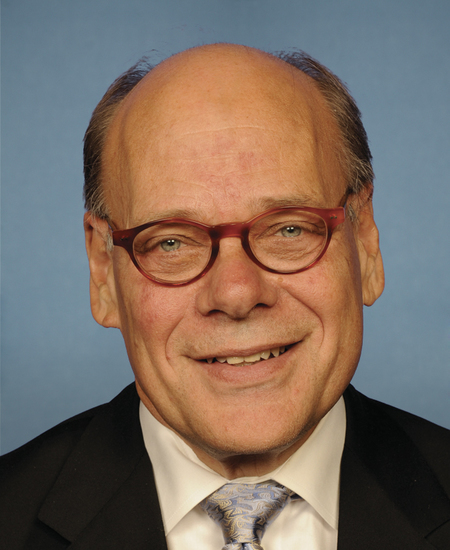
119th Congress Introduced by Steve Cohen and 5 co-sponsors

The bill would create a government-operated public health insurance option (PHIO) via ACA Exchanges, with Medicare-like provider rates if private negotiation fails.

Introduced in House
0
WeVote Research Nonpartisan
Bill Summary · HR 7023

Overview

  • Bill: H.R. 7023 (Affordable CHOICE Act)
  • Session: 119th Congress
  • Purpose: Amend the Affordable Care Act (ACA) to establish a public health insurance option (PHIO) offered through the Exchanges.
  • Introduced: January 12, 2026
  • Primary sponsors: Ms. Schakowsky and several co-sponsors
  • Status: Referred to the House Committee on Energy and Commerce

Main purpose and intent

  • Create a new public health insurance option that would be offered nationwide through the ACA Exchanges for plan years beginning on or after January 1, 2027.
  • Ensure the PHIO provides value, choice, competition, and stability of affordable, high-quality coverage while preserving access to care.
  • The PHIO would be administered by the Secretary (U.S. Department of Health and Human Services) and not operated by private insurers, with key provisions mirroring ACA Exchange requirements.

Key provisions and changes

Establishment and administration

  • Creates a new public health insurance option (PHIO) to be offered exclusively through the Exchanges, not by private issuers.
  • PHIO must comply with ACA Exchange requirements, including benefits, provider networks, notices, consumer protections, and cost-sharing.
  • Plans offered under PHIO must include bronze, silver, and gold metal levels.

Administrative operations

  • The Secretary may contract for administrative functions (similar to Medicare/Medicaid administrative arrangements) but cannot transfer insurance risk to the contract entities.
  • A State Advisory Council may be established (voluntarily by states) to advise on PHIO operations and policies, with recommendations on quality improvement, cost containment, public awareness, and alternative payment models. Council membership should include public representatives, consumers, and providers.

Data, rates, and financing

  • The Secretary will collect data to:
    • Establish premium rates for PHIO (geographically adjusted) and reimbursements to providers.
    • Improve quality and reduce disparities.
  • Premiums must be set to financially sustain PHIO, cover benefits and administrative costs, and include a contingency margin.
  • Premium variation is generally restricted, with rate variations allowed only as provided under section 2701 of the PHSA.
  • Provider payment rates:
    • By default, PHIO reimbursement rates will be negotiated with providers. If no agreement is reached, rates will default to equivalent Medicare Part A/B rates, with adjustments for new services (e.g., well-child visits).
    • Prescription drug payments will be negotiated; if not agreed, rates will default to Medicare Part D-equivalent rates and be adjusted for drugs not covered under traditional Medicare.
  • Start-up funding:
    • A Treasury account is established for PHIO receipts and disbursements, including start-up funding to cover 90 days of claims reserves.
    • Start-up funding is to be amortized repayment to the Treasury over 10 years beginning January 1, 2027.
    • Start-up funding and ongoing appropriations will be provided as necessary.

Provider participation and networks

  • The PHIO will establish conditions of participation for health care providers.
  • Licensed or certified providers under state law may participate.
  • Any provider already participating in Medicare/Medicaid is presumed to participate in PHIO unless they opt out through a Secretary-established process.
  • The Secretary will establish a process for non-Medicare/Medicaid providers to join PHIO.

Conforming amendments

  • The bill amends the ACA to:
    • Treat the PHIO as a qualified health plan (QHP) for purposes of the Exchange framework, with specific references to its status.
    • Ensure PHIO is included in “level playing field” provisions alongside other QHPs (i.e., pricing, enrollment, and consumer protections apply similarly).

Who/what would be affected

  • Individuals and employers purchasing coverage through ACA Exchanges would have the option to enroll in the new PHIO.
  • Health care providers would participate in PHIO under new participation terms and negotiated reimbursement rates (with Medicare-based fallback if needed).
  • State governments may establish a State Advisory Council to influence PHIO operations within their state.
  • The federal Treasury would manage a PHIO-related dedicated account for funding, reserves, and amortization of start-up funding.

Procedural and timeline aspects

  • Effective date for establishment: Plan years beginning on or after January 1, 2027.
  • Premium and provider rate processes:
    • Negotiated provider rates due by January 1, 2026, with Medicare-based rates as fallback if negotiations fail.
    • Drug payment rates to be negotiated with Medicare-based fallback if needed.
  • Start-up funding:
    • Authorized to be appropriated as necessary, with 90 days of claims reserves funded upfront and amortized repayment over 10 years starting 2027.
  • Administrative mechanics:
    • PHIO offered exclusively through Exchanges; no private issuer participation in offering the PHIO.
    • State Advisory Councils can influence PHIO in their state and potentially across states.

Notable implications

  • The bill represents a shift toward a government-operated public option intended to increase competition and potentially drive down premiums.
  • Financing relies on interim start-up funding with a repayment plan, affecting federal budgeting and long-term cost considerations.
  • Provider reimbursement structure aims to align with Medicare rates if private-negotiated rates do not reach agreement, potentially impacting provider participation and payer mix.
  • The PHIO would be integrated into existing ACA Exchange and QHP frameworks, requiring alignment with current benefit design and consumer protections.

Compiled from official sources — confirm details with the bill’s official record.

Sign in to ask a question.