

WeVote

Bill

Bill

HB 3052

Accessory dwelling units

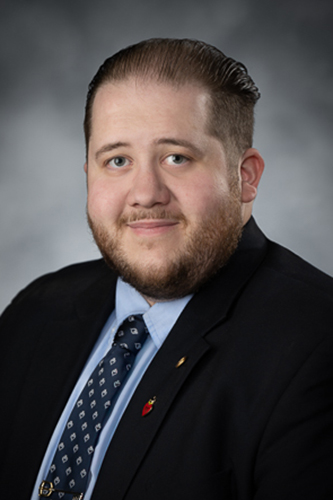
2025 Regular Session Introduced by Geno Chiarelli and 4 co-sponsors

HB 3052 lets Illinois exclude up to five mental/behavioral health absences from the <10 absences attendance metric on state, district, and school report cards.

To House Government Organization
0
WeVote Research Nonpartisan
Bill Summary · HB 3052

Summary — HB 3052 (104th General Assembly, 2025-2026)

Title: Relating to PFAS (content amends the School Code)
Primary sponsor: Rep. Nabeela Syed
Status: In committee upon adjournment (most recent status 2025-06-28)

Note: Although the bill caption reads “Relating to PFAS,” the text of HB 3052 amends Section 10‑17a of the Illinois School Code to change how a specific attendance measure is calculated on State and school report cards. The title appears inconsistent with the bill’s content.

Purpose / Intent

HB 3052 clarifies that, for the purpose of State, district, and school report cards, the State Superintendent is not required to count up to five absences taken for a student’s mental or behavioral health (as authorized under Section 26‑1 of the School Code) when calculating the metric “percentage of students with less than 10 absences in a school year.” The intent is to ensure mental/behavioral‑health absences do not negatively affect that attendance indicator.

Key provisions

  • Amends 105 ILCS 5/10‑17a (School Code, provisions governing State and school report cards).
  • Adds language stating the State Superintendent “does not need to include the 5 absences for the mental or behavior health of a student in the percentage of students with less than 10 absences in a school year.”
  • Leaves other report‑card requirements intact (e.g., timing of report cards, other indicators listed in Sec. 10‑17a).

Who/what would be affected

  • State Board of Education / State Superintendent: modifies how they present the attendance indicator on report cards.
  • School districts and individual schools: the attendance metric on report cards will exclude up to five mental/behavioral‑health absences when calculating the “<10 absences” percentage.
  • Students and families: students who use mental/behavioral‑health leave (up to five days under Sec. 26‑1) would be less likely to be counted as having excess absences for reporting/accountability purposes.
  • Public and stakeholders: publicly reported attendance percentages may increase for some schools, changing perceptions of school attendance and potentially influencing accountability discussions.

Potential impacts and considerations

  • Reduces disincentives for students to use mental/behavioral‑health leave by preventing those absences from lowering the “<10 absences” statistic.
  • Could improve reported attendance performance for schools with students using such absences.
  • Does not directly change funding or other accountability metrics beyond report‑card presentation; however, report‑card changes can affect public perception and policy discussions.
  • Requires coordination with existing Section 26‑1 leave provisions and data‑collection/reporting processes.

Procedural timeline / actions (selected)

  • Filed / First reading: 2025-02-06 (Rep. Nabeela Syed)
  • Read first time / Referred to Rules Committee / Referred to various education committees: Feb–Mar 2025
  • Referred to Public Education: 2025-03-20
  • In committee upon adjournment: 2025-06-28

If you want, I can: (1) compare the bill text to Section 26‑1 to show the exact interaction; (2) draft a one‑page explainer for school administrators on implementation and data reporting implications.

Compiled from official sources — confirm details with the bill’s official record.

Sign in to ask a question.