

WeVote

Bill

Bill

HR 9801

ABLE MATCH (Making Able a Tool to Combat Hardship) Act

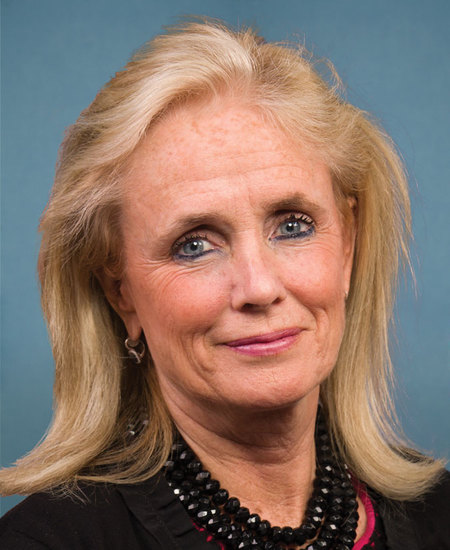
119th Congress Introduced by Debbie Dingell and 1 co-sponsor

The bill creates a federally funded, dollar-for-dollar matching credit (up to $2,000 per year) to encourage ABLE account contributions by low- to moderate-income individuals with d

Introduced in House
0
WeVote Research Nonpartisan
Bill Summary · HR 9801

ABLE MATCH (Making Able a Tool to Combat Hardship) Act – HR 9801 (119th Congress)

Purpose and intent

  • Create a federal program to provide matching payments for qualified ABLE account contributions by certain individuals.
  • Target it to individuals with disabilities who have annual incomes at or below 200% of the Federal poverty line.
  • Aim to encourage saving, increase ABLE account uptake, and reduce hardship for households with disabilities.

Key provisions and changes

  • New matching credit for ABLE contributions (Section 6433A):

    • Introduces a nonrefundable tax credit for designated beneficiaries of ABLE accounts.
    • Credit equals a percentage of qualified ABLE contributions, up to $2,000 per tax year.
    • Default (applicable percentage) is 100%, but there is a phase-out based on modified adjusted gross income (MAGI).
    • The credit is paid as a contribution to the ABLE account by the Secretary, treated as a contribution to the ABLE account.
    • The credit is limited by an overall cap: the credit cannot exceed the excess of the 529A contribution limit (the “applicable amount”) for the year over the actual contributed amount.
    • Phase-out mechanics:
    • The percentage begins at 100% and decreases as MAGI rises, described as a reduction based on the excess of MAGI over a threshold, scaled to 50 percentage points, relative to a $20,000 MAGI benchmark, and rounded down to whole percentage points.
    • The applicable dollar amount for determining the limit in a given filing status:
      • $56,000 for a joint return
      • 1/4 of that amount for head of household
      • 1/2 of that amount for all other filers
    • MAGI-based phase-out means higher-income earners receive a smaller credit, down toward zero.
    • Inflation adjustments: starting for years beginning after 2027, the $56,000 base amount is adjusted for cost-of-living increases with rounding to the nearest $1,000.
  • Qualified ABLE contributions (definition and rules):

    • Contributions to an ABLE account by the designated beneficiary are eligible for the credit; some distributions are excluded from the calculation of qualified contributions (e.g., certain ABLE program distributions not included in gross income).
    • Testing period for determining qualified contributions includes the taxable year, the two preceding years, and the period up to the tax return due date (with extensions).
    • Distributions for qualified disability expenses under ABLE/529A are excluded from testing reductions.
  • Treatment and administration (Section 6433A(c)-(f), (g)):

    • The credit is treated as a credit against income tax, paid to the ABLE account as described.
    • Provisions address erroneous credits and ensure they are treated as underpayments if improperly paid.
  • Applicability and related amendments (Sections 4, 5, 6):

    • Effective date: Provisions apply to taxable years beginning after December 31, 2026.
    • Amendments to include ABLE provisions in the federal tax code and associated cross-references.
    • Demographic reporting: Adds race, gender, and disability-type data reporting for ABLE program beneficiaries (to be included in reports to the Secretary).
    • Grants to promote ABLE accounts: Treasury may award grants to states to promote ABLE accounts and the matching contributions; authorization of $5 million per fiscal year 2027–2031 to fund these efforts.
  • Grants and funding (Section 6):

    • Establishes federal grants to states to support ABLE account usage and the matching credit program.
    • Annual appropriations of $5,000,000 for each fiscal year from 2027 through 2031.
  • Miscellaneous:

    • Clarifies treatment of possessions with mirror tax codes and coordinating with credit treatment for those territories.
    • Requires updating the table of sections and removal/creation of related code sections as part of the bill’s conforming amendments.

Who would be affected

  • Individuals who are designated beneficiaries of ABLE accounts and have earned income within the specified income threshold (MAGI near or below 200% of the federal poverty line) would be eligible for the new matching credit.
  • ABLE program administrators and ABLE account holders (designated beneficiaries) would experience changes in reporting and administration due to the new credit.
  • States could receive federal grants to promote ABLE accounts and the matching credit program.
  • Possessions with mirror tax systems and territories would receive transitional financial treatment to offset impact.
  • Taxpayers with ABLE accounts could benefit from increased incentives to save, potentially improving long-term financial resilience for individuals with disabilities.

Procedural and timeline aspects

  • Introduction date: July 21, 2026.
  • Committee referral: Ways and Means.
  • Effective date for the amendments: Taxable years beginning after December 31, 2026.
  • Inflation adjustments: Starting with tax years beginning in 2028, the base credit amount ($56,000) would be adjusted for cost of living.
  • Funding availability: Grants authorized for 2027–2031, totaling $5 million per year.

Summary assessment

The ABLE MATCH Act would create a federal matching credit designed to boost savings in ABLE accounts for individuals with disabilities who have modest income. By providing a dollar-for-dollar (and progressively phased) credit up to $2,000 per year, the bill incentivizes contributions to ABLE accounts, expands federal support through state grant programs, and includes administrative provisions to ensure proper implementation and reporting. The measure seeks to reduce poverty and support independent living for people with disabilities while expanding the reach and utilization of ABLE programs.

Compiled from official sources — confirm details with the bill’s official record.

Sign in to ask a question.