

WeVote

Bill

Bill

SJRES 169

A joint resolution providing for congressional disapproval under chapter 8 of title 5, United States Code, of the rule submitted by the Bureau of Consumer Financial Protection relating to the withdrawal of the rule relating to "Consumer Financial Protection Circular 2022-06: Unanticipated Overdraft Fee Assessment Practices".

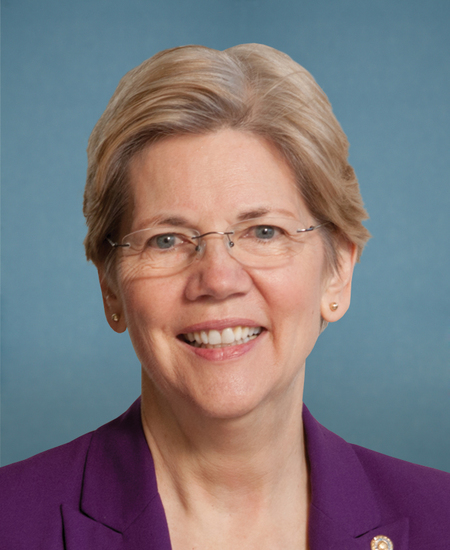
119th Congress Introduced by Elizabeth Warren

The bill uses the CRA to reverse CFPB’s withdrawal of overdraft guidance, reinstating the prior rules and preventing a similar rule without Congress’ authorization.

Introduced in Senate
0
WeVote Research Nonpartisan
Bill Summary · SJRES 169

Summary of SJRES 169 (119th Congress)

Overview

  • Type of bill: Joint resolution for congressional disapproval under the Congressional Review Act (CRA)
  • Purpose: To disapprove the Consumer Financial Protection Bureau’s (CFPB) rule withdrawal related to “Consumer Financial Protection Circular 2022-06: Unanticipated Overdraft Fee Assessment Practices.”
  • Jurisdiction: United States Senate
  • Introduced: 2026-04-13
  • Sponsor/Support: Co-sponsor Elizabeth Warren
  • Action history: Read twice and referred to the Senate Committee on Banking, Housing, and Urban Affairs (as of 2026-04-13)

What the bill would do

  • Constitutional/Procedural Mechanism: Under the CRA, Congress can disapprove a federal agency rule by passing a joint resolution of disapproval. If enacted, the rule at issue is nullified and the agency may not reissue a substantially similar rule without Congress’ authorization.
  • Specific target: The resolution targets the CFPB’s action to withdraw a previously issued rule or guidance related to “Unanticipated Overdraft Fee Assessment Practices” as described in CFPB Circular 2022-06.
  • Effect of passage: If SJRES 169 becomes law, the CFPB’s withdrawal action would be reversed, effectively reinstating the position or restrictions that were in place before the CFPB withdrew the rule/guidance. The agency would be constrained from implementing the withdrawal and would be required to maintain or restore the prior statutory/regulatory posture associated with unanticipated overdraft fee practices, or the framework that was in place prior to withdrawal.

Key provisions and changes (substantive)

  • Disapproval mechanism: Explicit use of the CRA to nullify the CFPB’s withdrawal decision.
  • Reinstatement effect: The previously applicable rule or guidance concerning overdraft fee assessment practices would be reinstated, as if the withdrawal had not occurred.
  • Limitations: The resolution does not itself create new rule text; it blocks the agency’s withdrawal action and reinstates the status quo ante for the rule/guidance in question.
  • Timeline/trigger: The CRA disapproval would take effect upon enactment of the joint resolution, subject to standard congressional procedures for CRA resolutions (bicameral passage and presidential signature).

Who is affected

  • Primary affected party: CFPB and entities subject to its overdraft-related regulatory framework, including banks and financial institutions that assess overdraft fees.
  • Consumers: Potentially affected indirectly through the persistence or revival of CFPB expectations and supervisory focus on overdraft fee practices.
  • Regulatory landscape: Reinstatement of the withdrawn rule’s implications may influence CFPB supervisory priorities, enforcement, and possible future rulemaking related to overdraft fees.

Procedural and timeline considerations

  • Legislative steps:
    1. Introduction and referral to the Senate Committee on Banking, Housing, and Urban Affairs.
    2. Committee consideration (not detailed in provided text).
    3. Floor passage in the Senate.
    4. Parallel action in the House of Representatives (not described here) and then Senate-House conference if differences arise.
    5. Presidential action (signing into law or veto).
  • CRA-specific timing: CRA challenges typically proceed on a relatively expedited timeline compared to standard rulemaking challenges, but exact timing depends on congressional action and scheduling.

Notable context

  • The bill has bipartisan sponsorship potential, with a notable co-sponsor in Senator Elizabeth Warren. The use of a CRA joint resolution to disapprove a CFPB withdrawal aligns with ongoing congressional scrutiny of CFPB regulatory actions surrounding consumer financial protections and overdraft practices.

If you’d like, I can add a brief comparison with the underlying Circular 2022-06 content (if available) or outline potential economic impacts for banks and customers based on typical overdraft fee policy scenarios.

Compiled from official sources — confirm details with the bill’s official record.

Sign in to ask a question.