

WeVote

Bill

Bill

SJRES 165

A joint resolution providing for congressional disapproval under chapter 8 of title 5, United States Code, of the rule submitted by the Bureau of Consumer Financial Protection relating to the withdrawal of the rule relating to "Bulletin 2015-02 re: Section 8 housing choice voucher homeownership program".

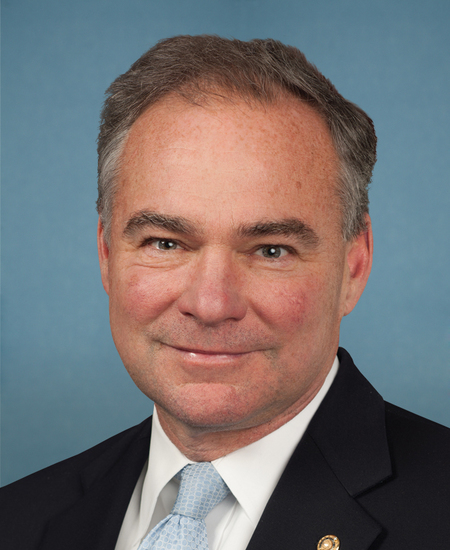
119th Congress Introduced by Tim Kaine

Disapprove and nullify the CFPB rule withdrawing the 2015 Bulletin on Section 8 Homeownership, restoring the prior guidance and regulatory framework.

Introduced in Senate
0
WeVote Research Nonpartisan
Bill Summary · SJRES 165

Summary of SJRES 165 (118th? 119th Congress) — Joint Resolution Providing for Congressional Disapproval under Chapter 8 of Title 5, United States Code, of the Rule Submitted by the Bureau of Consumer Financial Protection Relating to the Withdrawal of the Rule Relating to “Bulletin 2015-02 re: Section 8 Housing Choice Voucher Homeownership Program”

Note: This summary covers the bill as provided. It reflects the text and stated intent of the measure.

Purpose and Intent

  • The bill is a joint resolution that uses the Congressional disapproval mechanism under the Congressional Review Act (CRA), specifically Chapter 8 of title 5, United States Code.
  • Its stated aim is to disapprove the Bureau of Consumer Financial Protection’s (CFPB) rule that relates to the withdrawal of the rule associated with “Bulletin 2015–02 re: Section 8 housing choice voucher homeownership program” (the Bulletin issued in 2015 concerning the Section 8 Homeownership program).
  • If enacted, the rule “shall have no force or effect,” effectively reversing or nullifying the CFPB’s withdrawal action described in the rule.

Key Provisions and Changes

  • Disapproval: Congress disapproves the CFPB rule related to the withdrawal of the 2015 Bulletin concerning the Section 8 Housing Choice Voucher Homeownership Program.
  • Preemption/Effect: The joint resolution directs that the cited rule have no force or effect. This means:
    • The withdrawal action by the CFPB would be nullified.
    • The prior status of the Bulletin or the regime it established would be preserved or reinstated as if the withdrawal had not occurred.
  • The resolution relies on the CRA process, which, when enacted, prevents the rule from taking effect and effectively cancels the regulatory action in question.

Affected Parties and Subjects

  • Bureau of Consumer Financial Protection (CFPB): The agency whose rule is the subject of disapproval.
  • The Section 8 Housing Choice Voucher Homeownership Program: The program area referenced by Bulletin 2015-02; the rule’s withdrawal action impacts this program’s regulatory framework.
  • Housing assistance program participants and providers: While not named explicitly, changes to administrative guidance and program rules could affect program operations, Homeownership assistance, and voucher administration processes.

Procedural and Timeline Aspects

  • Introduction and Sponsor: Introduced in the Senate on April 13, 2026 by Senator Kaine, with Tim Kaine listed as a co-sponsor.
  • Referral: Referred to the Senate Committee on Banking, Housing, and Urban Affairs.
  • CRA Process: As a joint resolution under the Congressional Review Act, passage in both chambers would allow Congress to disapprove the CFPB rule with limited or no chance for the rule to take effect.
  • Textual Reference: The bill cites the rule as published at 90 Federal Register 20084 (May 12, 2015) and notes the withdrawal rule is associated with that Bulletin, implying an action around 2025 in the cited citation.

Practical Impact If Enacted

  • The CFPB’s withdrawal of the 2015 bulletin would be deemed null, returning the regulatory posture to what existed before the withdrawal.
  • This could restore or maintain CFPB guidance or requirements related to the Section 8 Housing Choice Voucher Homeownership Program as they existed prior to the withdrawal action.
  • Administrative processes and obligations for the CFPB, as well as affected housing authorities and voucher programs, would be expected to align with the reinstated framework.

If you’d like, I can provide a side-by-side comparison of the pre-withdrawal guidance versus the withdrawal framework to better illustrate the substantive changes this disapproval would restore.

Compiled from official sources — confirm details with the bill’s official record.

Sign in to ask a question.