

WeVote

Bill

Bill

SJRES 102

A joint resolution disapproving the action of the District of Columbia Council in approving the D.C. Income and Franchise Tax Conformity and Revision Temporary Amendment Act of 2025.

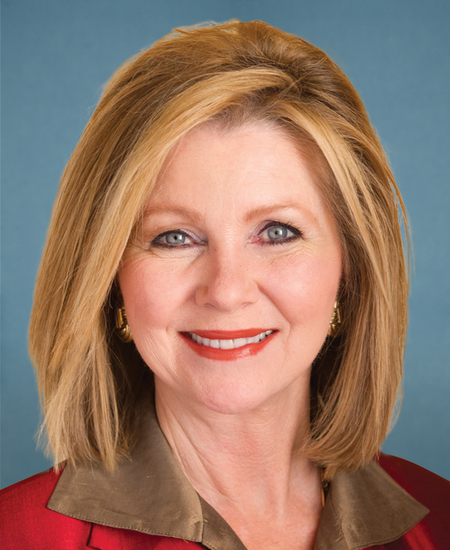
119th Congress Introduced by Marsha Blackburn and 8 co-sponsors

Disapproves DC's temporary tax conformity act, blocking changes to align DC income and franchise taxes with federal provisions.

Committee on Homeland Security and Governmental Affairs. Ordered to be reported without amendment favorably.
0
WeVote Research Nonpartisan
Bill Summary · SJRES 102

Summary of Bill: SJRES 102 (119th Congress)

Purpose and intent

  • This joint resolution disapproves the action taken by the District of Columbia Council to enact the D.C. Income and Franchise Tax Conformity and Revision Temporary Amendment Act of 2025 (D.C. Act A26–0217).
  • In short, Congress would block or veto the District of Columbia’s temporary tax conformity amendment that modifies how D.C. income and franchise taxes align with federal tax provisions.

Key provisions and changes the bill would make

  • The resolution states: Congress disapproves of the District of Columbia Council’s action described as the D.C. Income and Franchise Tax Conformity and Revision Temporary Amendment Act of 2025.
  • The DC act in question was enacted on December 20, 2025, and transmitted to Congress on December 30, 2025, under the District of Columbia Home Rule Act (Section 602(c)(1)).
  • By disapproving the DC act, the bill effectively prevents the District from implementing the temporary conformity and revision changes to its income and franchise tax regime as detailed in that DC act.

Who or what would be affected

  • The primary entities affected are:
    • District of Columbia residents and businesses subject to D.C. income and franchise taxes, who would have been impacted by the conformity changes.
    • The District government, which would have implemented the conformity and revision provisions.
    • Federal tax administration insofar as DC conformity provisions interact with federal tax rules.

Procedural and timeline aspects

  • Introduction and sponsorship:
    • Introduced in the Senate on January 27, 2026 by Senator Rick Scott (and co-sponsored by Senators Blackburn, Ernst, Mullin, Cramer, Moreno, Schmitt, and Moody).
  • Committee action:
    • Referred to the Senate Committee on Homeland Security and Governmental Affairs.
    • Reported by Senator Paul on February 4, 2026, without amendment.
    • The committee favorably ordered to be reported without amendment.
  • Legislative process status:
    • Placed on the Senate Legislative Calendar under General Orders (Calendar No. 314) on February 4, 2026.
    • As a joint resolution, if enacted, it would have the force of Congressional disapproval under the authority of the Congressional Review provisions governing the District of Columbia Home Rule Act (requires passage by both houses and may be subject to presidential signature or veto).

Additional notes

  • The measure is limited in scope to disapproval of the specific DC act cited (D.C. Act A26–0217) and does not repeal or permanently alter any other DC tax provisions outside that act.
  • The bill reflects ongoing Congressional oversight over DC Home Rule tax changes, particularly those enacted via temporary conformity provisions.

If you would like, I can provide a side-by-side comparison of the DC act’s provisions versus where those provisions would have diverged from federal tax rules, to illustrate the practical impact on taxpayers in the District.

Compiled from official sources — confirm details with the bill’s official record.

Sign in to ask a question.