Summary of Bill: SCONRES 33 (119th Congress)
Title: A concurrent resolution setting forth the congressional budget for the United States Government for fiscal year 2026 and setting forth the appropriate budgetary levels for fiscal years 2027 through 2035.
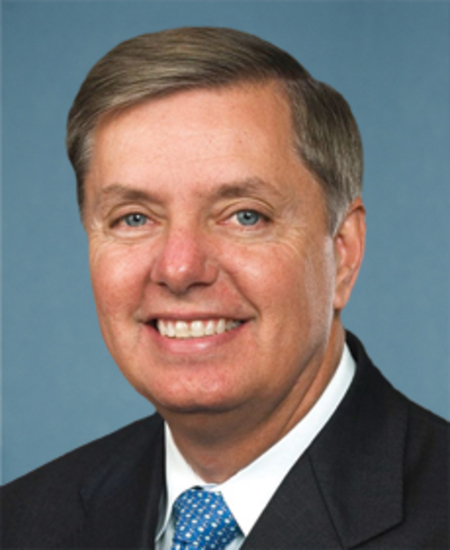
Sponsor: Sen. Lindsey Graham (co-sponsor)
Status: Passed by Senate at initial stage and placed on the Senate Legislative Calendar; referred to the Budget Committee and discharged. Action history indicates an initial floor passage in the Senate on April 21, 2026.
Purpose and overall intent
- This concurrent resolution provides the framework for enforcing budgetary levels for the federal government for fiscal year (FY) 2026 and establishes baseline budgetary levels for FYs 2027–2035.
- It serves to guide appropriations and policy decisions by specifying target revenues, new budget authority, outlays, deficits, and debt stock for each year and major functional category.
Key provisions and changes
- Title I: Recommended Levels and Amounts (budgets for FY 2026–2035)
- Section 1101.1: Federal Revenues
- Establishes annual recommended revenue levels for each fiscal year from 2026 through 2035 (e.g., FY2026: $4.242 trillion; FY2035: $6.078 trillion).
- Includes a zero-change adjustment for all years (i.e., no suggested adjustments to the baseline revenue levels themselves).
- Section 1101.2: New Budget Authority
- Sets annual total new budget authority for FY2026–FY2035 (e.g., FY2026: $5.402 trillion; FY2035: $6.771 trillion).
- Section 1101.3: Budget Outlays
- Establishes annual total budget outlays for FY2026–FY2035 (e.g., FY2026: $5.508 trillion; FY2035: $6.680 trillion).
- Section 1101.4: Deficits
- Specifies annual deficits consistent with the outlined outlays and revenues (e.g., FY2026: $1.265 trillion; FY2035: $0.602 trillion).
- Section 1101.5: Public Debt
- Provides debt stock figures for total public debt (e.g., FY2026: $39.164 trillion; FY2035: $49.861 trillion).
- Section 1101.6: Debt Held by the Public
- Provides debt held by the public (e.g., FY2026: $31.678 trillion; FY2035: $42.426 trillion).
- Section 1101.7: Major Functional Categories
- Specifies annual allocations (new budget authority and outlays) by major function, including National Defense, International Affairs, General Science, Energy, Natural Resources, Agriculture, Transportation, Education/Health/Income Security, Medicare, Social Security, Veterans Benefits, Administration of Justice, General Government, Net Interest, and other categories.
- Examples (selected years):
- National Defense: FY2026 new authority $934.139B; outlays $967.086B; FY2035: new authority $1,200.433B; outlays $1,172.233B.
- Health (programs under major health category): FY2026 new authority $990.989B; outlays $991.249B; FY2035: new authority $1,276.294B; outlays $1,261.576B.
- Social Security (including revenues/outlays and administrative expenses):
- Senate section 1201–1202 addresses Social Security revenues, outlays, and SSA/USPS administrative expenses for FY2026–2035.
- Medicare (major health program): FY2026 new authority $1,074.395B; outlays $1,073.511B; FY2035: new authority $1,744.777B; outlays $1,743.981B.
- Net Interest: rising interest costs reflecting debt; FY2026 outlays $1,099.727B; FY2035 $1,681.151B.
- Title II: Reconciliation
- Sec. 2001 (House) and Sec. 2002 (Senate)
- Outlines procedures for reconciliation legislation arising from the budget, including limits on the deficit impact of changes in law within specified committees (Homeland Security, Judiciary) for the FY2026–2035 period.
- Reconciliation plans are to be submitted by May 15, 2026, with the goal of carrying out recommendations without substantive revision.
- Title III: Reserve Funds
- Sec. 3001: Reserve Fund for Reconciliation Legislation
- Provides mechanisms to adjust allocations and aggregates to accommodate reconciliation bill budget effects, subject to deficit-neutral constraints.
- Sec. 3002: Deficit-Neutral Reserve Fund for President’s Reforms (post-Operation Metro Surge)
- Allows adjustments to allocations for immigration/enforcement reforms proposed by the President, provided they are deficit-neutral across FY2026–2035.
- Title IV: Other Matters
- Sec. 4101–4108: Enforcement, budgetary treatment of administrative expenses (including Social Security Administration and USPS), changes to allocations, handling of baseline changes, and rules governing enforcement and emergency designations.
Who is affected
- Congress: Provides a framework for budgeting and reconciliation; dictates how budgetary figures are allocated and enforced.
- Federal agencies and programs: Budget figures in major functional categories translate into ceilings and targets for appropriations, affecting planning and funding levels for defense, health care (including Social Security, Medicare), education, transportation, science, and other areas.
- Social Security and USPS: Separate budgetary treatment and administrative expense levels are specified in the Senate portions.
- The President and executive branch: The “Operation Metro Surge” provision interacts with proposed reforms, and the executive may propose changes that would be funded within the deficit-neutral reserve fund.
Procedural and timeline notes
- Submittals: House and Senate committees must submit reconciliation recommendations by May 15, 2026.
- Reconciliation process: Requires a reconciliation bill in both chambers carrying out approved recommendations without substantive revision.
- Enforcement: Provides mechanisms to enforce budgetary points of order and to publish allocations in the Congressional Record.
- Baseline adjustments: Allows adjustments for changes in budget concepts, definitions, and CBO baseline updates.
- Emergency provisions: Contains rules governing emergency designation treatment and related budget effects (with specific exclusions for counting emergency designations in certain contexts).
Bottom line
SCONRES 33 lays out a comprehensive, year-by-year budget framework for FY 2026–2035, including revenue targets, authorized new budget authority, projected outlays, deficits, and debt trajectories, while establishing reconciliation procedures and reserve funds to implement policy changes within those fiscal boundaries. It serves as the formal budget roadmap for Congress, guiding appropriations and potential reforms.