

WeVote

Bill

Bill

S 4766

A bill to require the Secretary of Defense to establish a pilot program to evaluate the safety, quality, and qualification pathways of printable energetic feedstocks for controlled additive manufacturing applications.

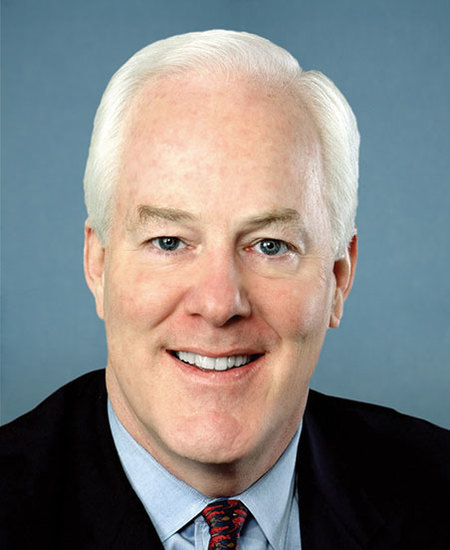
119th Congress Introduced by John Cornyn

The bill would pilot printable energetic feedstocks in defense AM, evaluating safety, logistics, and qualification pathways to enable future adoption if beneficial.

Introduced in Senate
0
WeVote Research Nonpartisan
Bill Summary · S 4766

Summary of Bill S.4766 (119th Congress)

Purpose

S.4766 would require the Secretary of Defense to establish a pilot program to evaluate the safety, quality, and qualification pathways for printable energetic feedstocks used in controlled additive manufacturing. The program would be conducted by the Under Secretary of Defense for Research and Engineering, in coordination with the Capability Program Executive for Ammunition and Energetics (or successor), and appropriate service acquisition executives.

Key Provisions

  • Establishment and governance

    • Creates a pilot program managed by the Defense Department, focusing on printable energetic feedstocks for additive manufacturing.
    • Coordination: Under Secretary of Defense for Research and Engineering, Capability Program Executive for Ammunition and Energetics, and service acquisition executives.
  • Purposes of the pilot (five core objectives)

    1. Assess whether printable energetic feedstocks can improve handling safety, process stability, lot-to-lot consistency, and supply chain resilience compared with traditional energetics manufacturing and handling.
    2. Analyze logistics impacts, including throughput, waste, defect rate, and availability of constituent materials versus legacy processes.
    3. Develop and validate new test/evaluation methods (potentially including metrology and digital quality assurance) if existing qualification pathways are insufficient.
    4. Determine applicability of printable energetic feedstocks to current or planned munitions modernization efforts, aligned with safety, security, and environmental requirements and potential performance/logistics advantages.
    5. Identify adoption barriers (infrastructure, standards, certification, and workforce needs).
  • Activities permitted under the pilot

    • Identify and characterize representative printable energetic feedstocks and assess performance consistency.
    • Develop qualification criteria and data packages to support safety releases, waivers, or certifications.
    • Conduct limited demonstrations at government or compliant contractor facilities.
    • Develop nonproprietary standards, metrology approaches, and digital thread quality controls.
    • Analyze operational effects through wargaming, mission/campaign modeling, and experimental performance data.
  • Comparative safety assessment

    • Require a core comparative evaluation of safety between printable feedstocks and traditional energetics, covering:
    • Storage, transport, handling, and processing hazards and risks.
    • Sensitivity and response to stimuli (thermal/mechanical) using appropriate standards.
    • Process safety considerations and potential failure modes/mitigations for AM workflows.
    • Accident/incident risk modeling and qualitative/quantitative risk assessment where feasible.
    • Recommended safety controls, facility requirements, and operational constraints for future use.
  • Safety and security requirements

    • Activities must occur only at facilities compliant with explosive safety siting, storage, handling, and operating requirements.
    • Must include inventory accountability, chain-of-custody controls, and counter-diversion safeguards.
    • Restricted dissemination: Does not authorize broad sharing of restricted manufacturing parameters outside approved government and cleared-industry channels.
  • Reporting requirements

    • Initial report due no later than 180 days after pilot initiation, with annual updates for the duration of the pilot.
    • Reports must cover:
    • Objectives, participants, locations, and safety governance.
    • Test methodologies, standards, and key safety/quality metrics.
    • Results related to feedstock identification/characterization, demonstrations, data packages, and standards development.
    • Findings from the comparative safety assessment (hazards, mitigations, residual risk).
    • Cost, schedule, and scalability relative to traditional methods.
    • Recommended qualification/certification pathways and any standards gaps.
    • Suggested legislative, regulatory, or resourcing actions to enable safe adoption.
  • Duration and termination

    • The pilot program would terminate two years after enactment of the bill.

Who Would Be Affected

  • Primary: U.S. Department of Defense, specifically the Under Secretary of Defense for Research and Engineering, the Capability Program Executive for Ammunition and Energetics (or successor), and service acquisition executives.
  • Stakeholders likely include defense laboratories/facilities capable of handling energetic materials, contractors engaged in additive manufacturing of energetics, and segments of the defense industrial base involved in munitions modernization.

Timeline and Procedural Notes

  • Introduced in the Senate on June 11, 2026, by Senator Cornyn (co-sponsor).
  • Referred to the Senate Committee on Armed Services.
  • The bill stipulates a two-year pilot period and requires semi-annual/annual reporting to congressional defense committees.
  • Does not specify funding amounts; would require appropriations to implement and sustain the pilot.

Overall Impact

  • Encourages exploration of additive manufacturing-amenable energetic feedstocks as a potentially safer, more reliable, and more efficient alternative to traditional energetics processes.
  • Aims to establish qualification standards, safety controls, and regulatory pathways to enable future adoption if the pilot demonstrates benefits.
  • Balances innovation with strict safety, security, and environmental considerations, ensuring demonstrations occur only at compliant facilities and with robust governance and traceability.

Compiled from official sources — confirm details with the bill’s official record.

Sign in to ask a question.