

WeVote

Bill

Bill

S 5047

A bill to require the Director of the National Institute of Standards and Technology to establish a working group to facilitate coordination among relevant stakeholders regarding compound risks relating to artificial intelligence physical systems, and for other purposes.

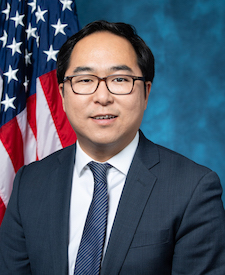
119th Congress Introduced by Andy Kim and 1 co-sponsor

Creates a NIST AI in physical systems working group to coordinate across sectors, identify compound risks, and develop standards and guidance to improve safety and resilience.

Introduced in Senate
0
WeVote Research Nonpartisan
Bill Summary · S 5047

Summary of Bill: S. 5047 (119th Congress) – National Institute of Standards and Technology Working Group on AI Physical Systems Risk

Purpose and intent

  • Establish a formal mechanism for coordination among government, industry, academia, and other stakeholders to address compound risks associated with artificial intelligence (AI) in physical systems.
  • Specifically aimed at “compound risks”—situations where AI-enabled physical systems (e.g., autonomous machinery, robotics, critical infrastructure controls) interact with other risk factors in ways that amplify harm or create unforeseen consequences.
  • The bill directs the Director of the National Institute of Standards and Technology (NIST) to create and support a working group to facilitate this coordination.

Key provisions and changes

  • Creation of a working group: The Director of NIST must establish a working group focused on AI in physical systems and the related compound risks.
  • Scope of coordination: The group is tasked with coordinating among relevant stakeholders, which can include federal agencies, industry, academia, standards bodies, and other interested parties.
  • Objectives of the working group:
    • Identify and analyze compound risk scenarios involving AI-driven physical systems.
    • Develop and share best practices, standards, and guidelines to mitigate such risks.
    • Promote interoperability and alignment across standards bodies and regulatory efforts.
    • Consider ethical, safety, security, privacy, and reliability dimensions of AI-enabled physical systems.
  • Recommendations and guidance: The working group is expected to produce reports or recommendations to improve risk assessment, testing, certification, and resilience of AI-enabled physical technologies.
  • Timeline and reporting: While the precise dates are not provided in the summary, typically such legislation includes requirements for periodic reporting and updates to Congress or the relevant committees. Expect a defined schedule for initial findings and subsequent progress reports.
  • Funding and administration: The bill would authorize or set expectations for NIST-facing support and potentially related funding mechanisms to sustain the working group’s activities.

Who is affected

  • Directly affected: NIST, as the lead agency responsible for establishing and guiding the working group.
  • Stakeholders to be involved: Federal agencies, industry players developing AI-enabled physical systems, research and academic institutions, standards organizations, consumer safety groups, and other interested parties that contribute to risk assessment and mitigation.
  • Indirect effects: The broader AI and robotics ecosystem could see accelerated development of standards, guidance, and best practices; potentially smoother cross-sector collaboration on safety, reliability, and interoperability.

Procedural and timeline aspects

  • Introduction and referral: Introduced in the Senate and referred to the Committee on Commerce, Science, and Transportation for consideration.
  • Action history to date: Read twice and placed in committee on July 21, 2026.
  • Next steps: Committee consideration, potential markups, and eventual floor action. If enacted, implementation would involve NIST establishing the working group, coordinating stakeholder engagement, and issuing guidelines and reports on a defined timeline.

Potential impact and significance

  • Aims to formalize cross-sector collaboration on AI risks in physical systems, addressing gaps where AI behavior interacts with real-world machinery and infrastructure.
  • Could lead to the development or alignment of standards and best practices that improve safety, security, and reliability of AI-enabled devices and systems.
  • May influence future regulatory and policy approaches by establishing a collaborative model for risk assessment and resilience in AI-driven technologies.

Note: This summary reflects the bill’s stated purpose and provisions as currently described in the action history. Full details, including, where applicable, explicit timelines, funding levels, and the precise scope of the working group’s authority, would be clarified in the text of the bill and any subsequent committee reports.

Compiled from official sources — confirm details with the bill’s official record.

Sign in to ask a question.