

WeVote

Bill

Bill

S 2805

Designating the Russian Federation as a State Sponsor of Terrorism Act

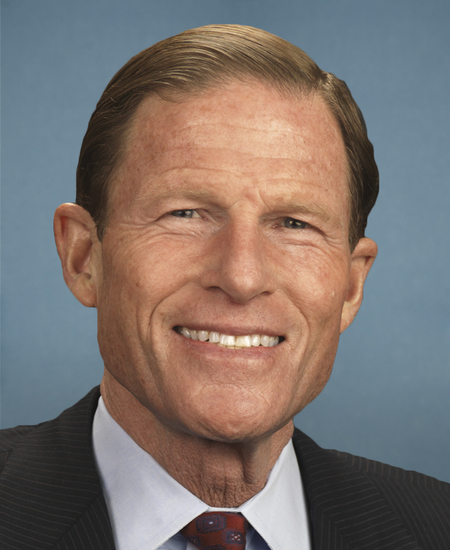
119th Congress Introduced by Richard Blumenthal and 3 co-sponsors

S 2805: Designating the Russian Federation as a State Sponsor of Terrorism Act SummaryThis bill, titled the "Designating the Russian Federation as a State Sponsor of Terrorism Act,

Read the second time. Placed on Senate Legislative Calendar under General Orders. Calendar No. 160.
0
WeVote Research Nonpartisan
Bill Summary · S 2805

S 2805: Designating the Russian Federation as a State Sponsor of Terrorism Act

Summary

This bill, titled the "Designating the Russian Federation as a State Sponsor of Terrorism Act," seeks to formally designate the Russian Federation as a state sponsor of terrorism. If enacted, the legislation would mandate the U.S. Secretary of State to make this formal designation, triggering a series of economic and diplomatic sanctions against Russia.

Key Provisions

  • Requires the Secretary of State to determine whether the Russian Federation meets the criteria to be designated as a state sponsor of terrorism within 90 days of the bill's enactment.
  • If the determination is positive, the Secretary must formally designate Russia as a state sponsor of terrorism.
  • Imposes mandatory sanctions, including restrictions on U.S. foreign assistance, a ban on defense exports and sales, and limitations on exports of certain goods and technologies.
  • Directs the President to oppose Russia's membership and participation in international organizations and entities, such as the United Nations Security Council.
  • Calls for the U.S. to work with allies and partners to impose additional multilateral sanctions on Russia.

Potential Impact

  • This designation would significantly escalate economic and diplomatic pressure on the Russian government, isolating it further on the global stage.
  • It could have far-reaching consequences for Russia's relationships with other countries, international organizations, and the global financial system.
  • The sanctions could negatively impact the Russian economy, potentially disrupting trade, investment, and access to technology and equipment.
  • The legislation also aims to galvanize broader international support for measures against Russia, though the extent of such support remains uncertain.

Procedural Considerations

  • The bill was introduced in the Senate on September 15, 2025 and has been placed on the Senate Legislative Calendar.
  • A companion bill, H.R. 5797, has also been introduced in the House of Representatives.
  • The bill will need to pass both chambers of Congress and be signed into law by the President to take effect.

Compiled from official sources — confirm details with the bill’s official record.

Sign in to ask a question.