

WeVote

Bill

Bill

S 4697

A bill to provide for design and safety requirements for autonomous and semi-autonomous weapon systems, and for other purposes.

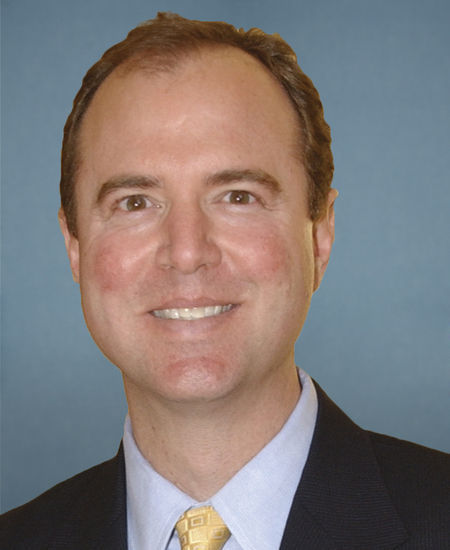
119th Congress Introduced by Adam Schiff

Establishes design, safety, and accountability standards for autonomous weapons to ensure reliable performance, civilian protection, and compliance with international law.

Introduced in Senate
0
WeVote Research Nonpartisan
Bill Summary · S 4697

Summary of Bill: S. 4697 (119th Congress) – Design and Safety Requirements for Autonomous and Semi-Autonomous Weapon Systems

Purpose and Intent

  • The bill aims to establish design and safety standards for autonomous and semi-autonomous weapon systems, with the objective of reducing risks associated with their development, deployment, and use.
  • It seeks to create a framework to ensure such systems comply with applicable laws of armed conflict, minimize unintended escalations, and promote accountability for weapon designers and operators.
  • Introduced in the Senate and referred to the Committee on Armed Services; co-sponsored by Adam Schiff.

Key Provisions and Changes

  • Design Requirements

    • Establishes criteria for the fundamental design of autonomous and semi-autonomous weapons to ensure reliable performance under diverse conditions.
    • Emphasizes fail-safes, verification, and validation processes to prevent malfunctions or exploitation.
  • Safety Standards

    • Mandates safety protocols to mitigate risks to civilians and noncombatants.
    • Requires rigorous testing for reliability, robustness, and resilience against adversarial manipulation or spoofing.
  • Compliance with Law of Armed Conflict

    • Obvious alignment with international humanitarian law; systems must be capable of adhering to principles such as distinction (avoiding civilian harm) and proportionality.
    • Provisions may include mandated human oversight or intervention triggers in certain scenarios (subject to the bill’s exact language).
  • Accountability and Oversight

    • Creates mechanisms to track development, testing, procurement, and deployment of autonomous weapon systems.
    • Establishes reporting requirements and potential audit rights for relevant government bodies.
  • Procurement and Standards Adoption

    • Encourages or directs federal agencies to adopt these design and safety standards in purchasing decisions.
    • Could establish benchmarks for vendors and contractors involved in research, development, and production.
  • Definitions

    • Clarifies terminology for autonomous weapon systems, semi-autonomous systems, and related components to avoid ambiguity in enforcement and interpretation.

Who Would Be Affected

  • Federal Agencies and Departments
    • Department of Defense and other agencies involved in research, development, testing, procurement, and deployment of weapon systems.
  • Industry and Contractors
    • Defense contractors, suppliers, and research institutions engaged in design and manufacturing of autonomous weapon technologies.
  • Researchers and Developers
    • Organizations conducting AI, robotics, or autonomous-system R&D with potential military applications.
  • Oversight Bodies
    • Congressional committees and relevant defense agencies responsible for compliance, auditing, and reporting.

Procedural and Timeline Considerations

  • Introduced and Referral
    • Introduced in the Senate and referred to the Committee on Armed Services for consideration.
  • Potential Committee Actions
    • The committee may hold hearings, request expert testimony, and develop legislative language to specify standards and enforcement mechanisms.
  • Enactment Timeline
    • No enacted provisions are specified in the current summary; timelines would depend on committee markup, floor action, and potential Senate–House negotiations if passed.

Significance and Potential Impact

  • Establishes a formal framework to govern the safety and design of increasingly capable autonomous weapons.
  • Aims to reduce risk of unintended or uncontrolled use by incorporating human oversight elements and robust testing.
  • Could influence international norms by signaling a United States approach to responsible development of autonomous weapons.
  • Potentially affects timelines for defense procurement, supplier compliance, and research funding related to autonomous systems.

If you want, I can add a side-by-side comparison with existing laws or a section on potential ambiguities and unanswered questions within the bill.

Compiled from official sources — confirm details with the bill’s official record.

Sign in to ask a question.