

WeVote

Bill

Bill

S 4813

A bill to authorize leases of up to 99 years for land held in trust for federally recognized Indian Tribes.

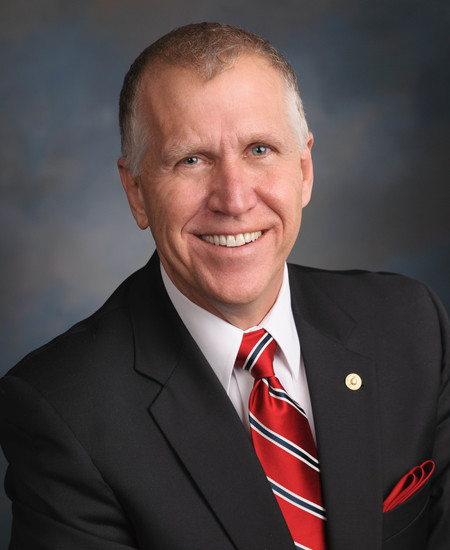
119th Congress Introduced by Thom Tillis

Expands leasing authority on trust land to allow up to 99-year leases for tribes on the 1994 Federal Recognized Indian Tribe List Act list.

Introduced in Senate
0
WeVote Research Nonpartisan
Bill Summary · S 4813

Overview

  • Bill: S. 4813
  • Session: 119th Congress
  • Title: A bill to authorize leases of up to 99 years for land held in trust for federally recognized Indian Tribes
  • Introduced: June 17, 2026 by Sen. Thom Tillis (co-sponsor)
  • Status: Read twice and referred to the Senate Committee on Indian Affairs

Purpose and intent

  • The bill seeks to expand leasing authority for land held in trust by federally recognized Indian Tribes.
  • Specifically, it authorizes leases of up to 99 years for land held in trust for tribes, broadening or clarifying leasing terms beyond current authorities.
  • The change is framed as modifying the Leasing Authority provision within the Indian Reorganization/land-into-trust framework established by prior law.

Key provisions

  • Amends the first section of the Act of August 9, 1955 (commonly the “64 Stat. 539” statute) to insert new language.
  • The amendment adds land held in trust for tribes listed on the Federal Recognized Indian Tribe List Act of 1994 (25 U.S.C. 5131) into the scope of leasing authority.
  • The precise text inserts: after the phrase “Chehalis Reservation,” the phrase “, land held in trust for any other Indian tribe included on the list published by the Secretary pursuant to section 104 of the Federally Recognized Indian Tribe List Act of 1994 (25 U.S.C. 5131).”
  • Implication: Tribes on the 1994 list can enter leases of up to 99 years for trust land, potentially including land held in trust for tribes not previously covered by the 1950s leasing regime.

Who/what is affected

  • Federally recognized Indian Tribes whose lands are held in trust.
  • Specifically, tribes listed on the Federally Recognized Indian Tribe List Act of 1994 (25 U.S.C. 5131) would be newly covered by the expanded leasing authority.
  • Tribes’ ability to lease trust land for extended terms could affect:
    • Housing and residential development
    • Commercial and economic development (e.g., gaming, retail, energy projects)
    • Renewable energy and infrastructure projects
    • Leasing arrangements with non-tribal entities (developers, businesses, financial managers)

Procedural and timeline aspects

  • The bill has been introduced and referred to the Senate Committee on Indian Affairs.
  • There is no companion House bill text provided in the summary; fate depends on committee action and potential floor consideration.
  • If enacted, the leasing authority would become effective upon implementation of the amended language, subject to any future regulatory guidance or administrative procedures.

Potential impacts and considerations

  • Positive implications:
    • Provides tribes with longer-term leasing options (up to 99 years) to attract investment for development projects.
    • Could increase financial stability for tribal land use and revenue generation.
  • Potential considerations:
    • Need for safeguards to protect tribal sovereignty, surface rights, environmental stewardship, and cultural resources.
    • Impacts on land use planning, tax considerations, and revenue sharing with tribal members.
    • Interaction with existing leasing regimes and federal oversight.

Summary

S. 4813 proposes to expand the lease-term horizon for land held in trust by federally recognized tribes by enabling leases up to 99 years for tribes listed on the Federally Recognized Indian Tribe List Act of 1994. The measure would amend the 1955 leasing authority statute to include these additional tribes, potentially broadening opportunities for economic development and investment on trust lands, while prompting consideration of appropriate protections and governance oversight.

Compiled from official sources — confirm details with the bill’s official record.

Sign in to ask a question.