

WeVote

Bill

Bill

S 4707

Responsible Artificial Intelligence Defense Act of 2026

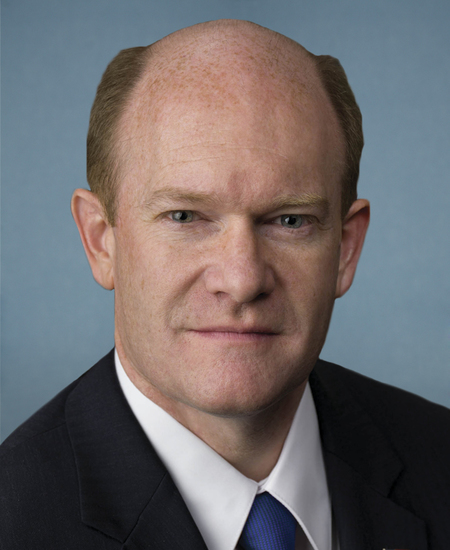
119th Congress Introduced by Chris Coons

The bill would require formal DoD policy and standardized reviews to ensure safe, reliable, lawful, and verifiable use of autonomous and AI systems across all branches.

Introduced in Senate
0
WeVote Research Nonpartisan
Bill Summary · S 4707

Summary of S. 4707 (119th Congress) – A bill to amend title 10, United States Code, to establish a policy for the Department of Defense on maximizing autonomy and artificial intelligence systems, to establish requirements relating to Department review and verification of autonomous weapon systems, and artificial intelligence capabilities, and for other purposes

Purpose and intent

  • The bill proposes to amend Title 10 U.S. Code to formalize a Department of Defense (DOD) policy aimed at maximizing the ethical, safe, and effective use of autonomy and artificial intelligence (AI) systems across military operations.
  • It seeks to establish governance, review, and verification requirements for autonomous weapon systems and AI capabilities to ensure oversight, accountability, and risk management.

Key provisions and changes (highlights)

  • Policy objective: Create a DOD overarching policy focused on achieving optimal autonomy and AI utilization while addressing safety, reliability, ethics, and compliance considerations.
  • Department-wide alignment: The bill would mandate standardized standards and procedures across components of the DOD to govern development, deployment, and operation of autonomous and AI-enabled systems.
  • Review and verification requirements:
    • Establish formal mechanisms for ongoing review and verification of autonomous weapon systems and AI capabilities.
    • Include criteria to assess safety, reliability, mission effectiveness, cybersecurity, and resilience against adversarial actions.
    • Potentially require independent verification or certification processes prior to fielding certain systems, with periodic re-verification.
  • Autonomy and weapon systems governance:
    • Outline processes for the acquisition, testing, evaluation, and deployment of AI-enabled weapons and autonomous platforms.
    • Emphasize risk assessment frameworks, human-machine interface considerations, and human oversight where appropriate.
  • Ethical, legal, and compliance considerations:
    • Incorporate principles related to compliance with international law, rules of engagement, and safeguarding civilian harm reduction.
    • Address accountability schemes for autonomous decision-making and chain-of-command responsibilities.
  • Reporting and oversight:
    • Likely directives for reporting to Congress or internal DOD oversight bodies on progress, risk assessments, and verification results.
  • Other purposes: The bill may include additional provisions related to training, data governance, interoperability, and investment in AI research and infrastructure to support autonomy initiatives.

Who would be affected

  • Department of Defense components: Army, Navy, Air Force, Marine Corps, Space Force, and joint organizations would implement the policy and procedures.
  • DOD personnel and contractors: Those involved in development, testing, procurement, deployment, and oversight of autonomous and AI systems.
  • Military operations and commanders: Systems and platforms leveraging autonomy and AI would be subject to the new review and verification requirements.
  • Congress and oversight bodies: Receiving reports and monitoring DOD progress on AI autonomy governance.

Procedural and timeline aspects

  • Introduction and referral: Introduced in the Senate and referred to the Committee on Armed Services (as of 2026-06-08).
  • Action history: The bill has moved from introduction to committee consideration, indicating potential subsequent hearings, amendments, and votes as part of the legislative process.
  • Potential timelines (typical for such legislation): If advanced, it could proceed to committee markup, floor debate, and passage in one chamber, followed by consideration in the other chamber, with conference if differences arise, and eventual presidential approval or veto.

Potential impact and implications

  • Operational impact: Could lead to more rigorous testing, certification, and oversight of autonomous and AI systems before and after deployment, potentially increasing safety and reliability.
  • Strategic implications: May influence DoD’s tempo and governance of AI investments, data practices, and interoperability across services.
  • Ethical and legal alignment: Aims to strengthen adherence to international law and ethical standards in autonomous operations.
  • Industry and research effects: Could drive demand for standardized verification frameworks, cybersecurity measures, and AI reliability research.

If you’d like, I can tailor this summary to focus on specific sections once the bill’s text is available, or compare it to prior related legislation to highlight proposed evolutions.

Compiled from official sources — confirm details with the bill’s official record.

Sign in to ask a question.