

WeVote

Bill

Bill

S 4896

Child Care Innovation Advancement Act of 2026

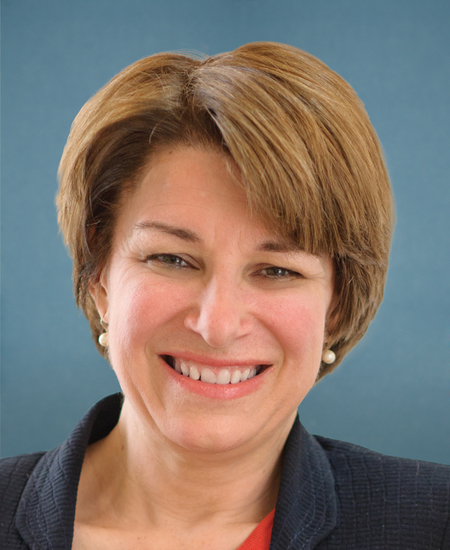
119th Congress Introduced by Amy Klobuchar and 1 co-sponsor

Creates a federal Child Care Innovation Nutrition Pilot Program to test and evaluate new nutrition practices in early care settings with potential expansion.

Introduced in Senate
0
WeVote Research Nonpartisan
Bill Summary · S 4896

Overview

S. 4896, introduced in the 119th Congress and co-sponsored by Senators Amy Klobuchar and Jeanne Shaheen, seeks to amend the Richard B. Russell National School Lunch Act to establish a new program focused on child care nutrition innovation. The bill aims to pilot and evaluate approaches that improve nutrition and meal access in child care settings, with potential expansion based on pilot results and program needs.

Purpose and Intent

  • Create a dedicated pilot program under the Richard B. Russell National School Lunch Act to support innovation in child care nutrition.
  • Address gaps in nutritious meals and reliable access to healthy foods for children in early care and education settings.
  • Generate evidence on effective nutrition interventions that could inform broader policy or program design.

Key Provisions

While the full text is not provided here, the bill’s title and scope indicate the following likely elements:

  • Establishment of a Child Care Innovation Nutrition Pilot Program within the framework of the National School Lunch Act.
  • Authorization of federal funding or administrative support to eligible child care providers to participate in the pilot.
  • Development and testing of innovative nutrition practices, curricula, menus, procurement methods, or meal-service models tailored to child care settings.
  • Evaluation components to assess outcomes such as child health and nutrition adequacy, participation rates, costs, and operational feasibility.
  • Provisions for reporting findings to Congress and potential guidance for scaling successful innovations.
  • Coordination with existing nutrition programs and compliance with relevant federal standards for child nutrition.

Affected Parties

  • Eligible child care providers and centers participating in the pilot.
  • Children enrolled in participating child care programs, and their families.
  • State and local agencies implementing child care nutrition initiatives.
  • Federal departments and agencies administering the National School Lunch Act and related school meal programs.

Procedural and Timeline Aspects

  • Action to introduce the bill occurred on 2026-06-24, followed by referral to the Senate Committee on Agriculture, Nutrition, and Forestry for consideration.
  • The bill would proceed through typical congressional steps: committee review, potential markups, floor consideration, and, if advanced, reconciliation with the House version (if applicable) before signing into law.
  • The pilot would presumably include a defined funding period, with milestones for implementation, monitoring, and evaluation, though exact timelines are not specified in the summary available.

Potential Impacts and Significance

  • Could lead to innovative nutrition delivery approaches in early care, potentially improving dietary quality and food security for preschool-aged children.
  • May inform future federal policy on child nutrition beyond traditional school lunch programs, particularly for non-school-based child care settings.
  • If successful, findings could justify expansion or replication of pilot models across states.

Notes for Readers

  • The summary reflects the bill’s stated aim to establish a pilot program and does not provide the full legislative text or all specific provisions. For a complete understanding, reviewing the bill’s text, fiscal notes, and committee reports when available is recommended.

Compiled from official sources — confirm details with the bill’s official record.

Sign in to ask a question.