

Bill
Sponsor avatar

BILL • US SENATE

S 4510

Relief for Families of the Fallen Act

119th Congress
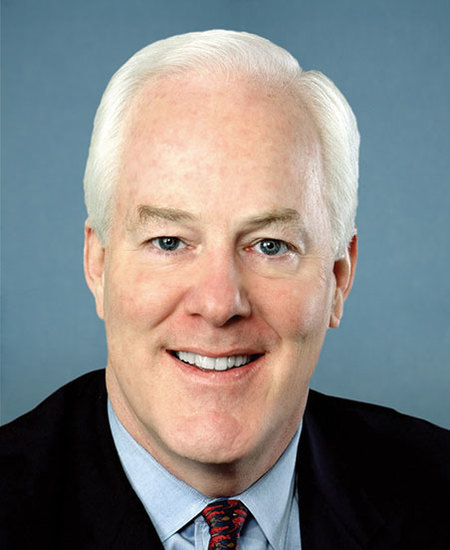
Introduced by John Cornyn, Maggie Hassan,

The bill would provide federal tax relief to families of public safety officers who die from injuries sustained in the line of duty.

Introduced in Senate
0
0
Bill Summary · S 4510

Overview

S. 4510, introduced in the 119th Congress and referred to the Senate Committee on Finance, seeks to amend the Internal Revenue Code of 1986 to provide tax relief to the families of public safety officers who died as a result of injuries sustained in the line of duty. The bill has bipartisan co-sponsorship from Senators Maggie Hassan and John Cornyn. It was introduced and read twice on May 13, 2026, and subsequently referred to the Committee on Finance.

Purpose and Intent

  • Primary goal: Deliver federal tax relief to eligible families of public safety officers who die due to injuries incurred in the line of duty.
  • The measure aims to provide financial support to survivors by reducing the tax burden associated with the public safety officer’s death, thereby improving the net resources available to families during a period of bereavement and adjustment.

Key Provisions (as described)

  • Tax relief mechanism: The bill would modify the Internal Revenue Code to create or extend tax benefits for eligible families. While the exact mechanism (e.g., exemption, credit, exclusion, or parity with other public safety provisions) is not enumerated in the summary provided, the bill’s central design is to alleviate federal tax liability tied to the death of a line-of-duty injury.
  • Eligibility: The relief would apply to families of public safety officers who died as a result of injuries sustained in the line of duty. Specific criteria (e.g., definition of “public safety officer,” timing of death relative to injury, and transitional rules) would be established in the text of the bill.
  • Interaction with existing law: The bill would operate within the structure of the Internal Revenue Code, potentially modifying sections related to income tax exclusions, deductions, credits, or other incentives available to survivors of public safety personnel.

Note: The exact computational mechanics (rates, phase-ins, caps, offsets, or phase-out provisions) are not detailed in the provided summary. The bill would be implemented via amendments to the IRC, with the precise language determining applicability and interaction with other tax provisions.

Who Would Be Affected

  • Primary beneficiaries: Families of public safety officers (e.g., police, sheriff, corrections officers, fire and emergency medical services personnel) who die due to injuries sustained in the line of duty.
  • Taxpayers affected indirectly: The increase in federal tax relief could affect the deceased officer’s survivors’ overall tax liability, potentially altering refund amounts or tax due for the year in which the death occurred and subsequent years if applicable.
  • Government and agencies: The Internal Revenue Service would administer the provision, including determination of eligibility and processing of any qualifying benefits.

Procedural and Timeline Aspects

  • Introduction and consideration: The bill was introduced in the Senate and read twice on May 13, 2026.
  • Referral: The bill was referred to the Senate Committee on Finance for review and potential markup.
  • Next steps: Committee hearings, potential amendments, and eventual floor consideration in the Senate. If passed, it would move to the House (or further legislative steps) depending on congressional process and any reconciliation or companion bills.

Potential Impacts and Considerations

  • Financial impact: The provision would affect federal tax receipts by reducing tax liability for eligible families; the magnitude depends on the final design (exclusion/credit/deduction, cap, per-family limits, and phase-ins).
  • Administrative considerations: Defining eligibility, verifying line-of-duty status, and handling survivor claims would require clear guidance from the IRS and related agencies.
  • Policy context: Aligns with ongoing congressional interest in supporting first responders and public safety families, complementing state and local benefits and existing federal programs.

If you’d like, I can tailor this summary to reflect the bill’s specific text (once available) and provide a detailed section-by-section analysis, including any estimated fiscal impact and cross-references to related tax provisions.

Hi! I'm your AI assistant for S 4510. I can help you understand its provisions, impacts, and answer any questions.

Key Provisions Impacts Timeline
Sign in to chat

Start the Conversation

Be the first to share your thoughts on this petition. Your voice matters!

Share your opinion above