

WeVote

Bill

Bill

S 4700

A bill to amend the Internal Revenue Code of 1986 to allow a credit against income tax for qualified conservation contributions which include National Scenic Trails.

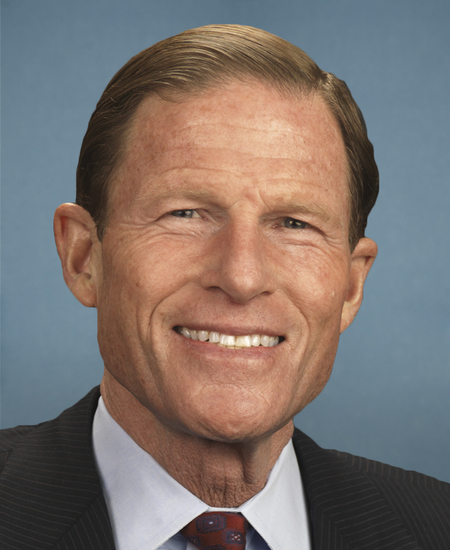
119th Congress Introduced by Richard Blumenthal and 2 co-sponsors

A new nonrefundable federal tax credit would reward qualified conservation contributions, explicitly including National Scenic Trails, to boost private donations for conservation.

Introduced in Senate
0
WeVote Research Nonpartisan
Bill Summary · S 4700

Overview

S. 4700, introduced in the 119th Congress, would amend the Internal Revenue Code of 1986 to create a new income tax credit for qualified conservation contributions, with National Scenic Trails specifically included among eligible contributions. The bill’s sponsors include Elizabeth Warren, Richard Blumenthal, and Chris Van Hollen (co-sponsors).

Purpose and intent

  • Establish a nonrefundable income tax credit designed to incentivize charitable donations and other qualified conservation contributions to conservation organizations or qualified entities.
  • Specifically expand the set of eligible contributions to include National Scenic Trails, aiming to bolster conservation, public recreation, and related land stewardship efforts.

Key provisions and changes

  • Creation of a new tax credit against federal income tax for qualified conservation contributions.
  • Eligible contributions: Contributions that meet the criteria of “qualified conservation contributions” under the bill, with explicit inclusion of National Scenic Trails as qualifying components. This broadens the scope of eligible projects/lands beyond traditional conservation categories.
  • Credit structure: The bill would define the credit amount, eligibility requirements, and any applicable limits, although the exact percentage, cap, and carry-forward/adjustment rules are not specified in the provided summary.
  • Interaction with existing incentives: The bill would modify the Internal Revenue Code to incorporate the new credit alongside or in place of existing conservation-related tax benefits. Details such as order of operations, coordination with other credits, and revenue impact would be determined by the statutory language.

Who is affected

  • Donors: Individuals and possibly entities who make qualified conservation contributions that meet the bill’s criteria could be eligible for the new federal income tax credit.
  • Conservation organizations and qualified entities: Organizations that receive qualified conservation contributions and that meet the bill’s criteria would be the channels through which donations are claimed.
  • National Scenic Trails: As a specifically included category, lands or projects associated with National Scenic Trails could be eligible for contributions that qualify for the credit.

Procedural and timeline aspects

  • Read twice and referred to the Senate Committee on Finance (June 8, 2026).
  • Introduced in the Senate (June 8, 2026).
  • Next steps typically involve committee consideration, potential markups, and floor debate. The bill’s revenue impact, reporting requirements, and transition provisions would be further defined in committee or on the floor.

Potential impact (high-level)

  • May stimulate private philanthropy toward conservation by providing a federal tax incentive for qualified contributions.
  • Could increase support for National Scenic Trails and related conservation projects by expanding eligible contribution categories.
  • Fiscal impact on federal revenue would depend on the credit rate, caps, and how broadly “qualified conservation contributions” are defined and applied.

Note: The summary reflects the information available in the action history and sponsor details. The precise statutory language would specify credit percentage, limits, eligible recipients, verification, and compliance requirements.

Compiled from official sources — confirm details with the bill’s official record.

Sign in to ask a question.