

WeVote

Bill

Bill

S 4655

A bill to allow the Farm Credit Administration the option to examine low-risk Farm Credit System institutions under a 24-month cycle.

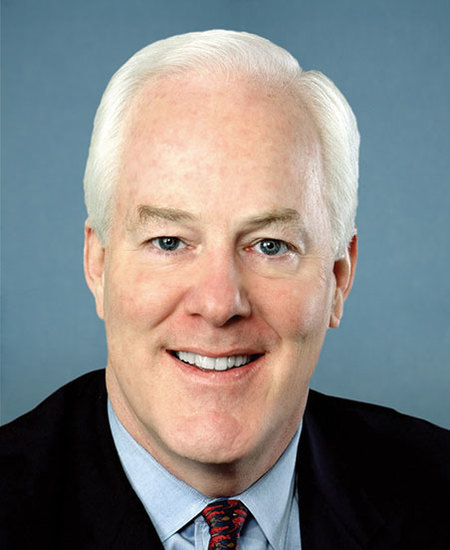
119th Congress Introduced by John Cornyn and 1 co-sponsor

The bill allows the Farm Credit Administration to use a 24-month exam cycle for certain low-risk Farm Credit System institutions, boosting supervisory efficiency while maintaining

Introduced in Senate
0
WeVote Research Nonpartisan
Bill Summary · S 4655

Summary of S. 4655 (119th Congress)

Purpose and intent

S. 4655 seeks to provide the Farm Credit Administration (FCA) with the option to adjust the examination cycle for certain Farm Credit System institutions. Specifically, the bill would allow FCA to examine low-risk Farm Credit System institutions on a 24-month cycle (instead of a more frequent schedule), giving FCA flexibility in its supervisory approach while maintaining oversight of safety and soundness.

Key provisions and changes

  • Examination cycle option: The FCA would have the option to conduct examinations of low-risk Farm Credit System institutions on a biennial (every 24 months) basis, rather than the standard or more frequent cycle that might apply to higher-risk or more complex institutions.
  • Scope of applicability: The provision targets “low-risk” institutions within the Farm Credit System. The bill would define or allow FCA to determine which institutions qualify for the extended 24-month cycle, presumably based on risk assessments and performance metrics.
  • Maintaining supervision standards: Even with a 24-month cycle for certain institutions, FCA would continue to exercise appropriate supervisory authority to ensure safety, soundness, and compliance with applicable laws and regulations.

Affected parties and stakeholders

  • Farm Credit Administration: The agency would gain optional flexibility to stagger examinations on a 24-month cadence for eligible institutions.
  • Farm Credit System institutions: Particularly those deemed low-risk, which could experience longer intervals between formal examinations under this option.
  • Co-sponsors: Tim Kaine (D-VA) and John Cornyn (R-TX) endorse the bill, indicating bipartisan support for adaptive supervision within the Farm Credit System.

Procedural and timeline aspects

  • Intro and referral: Introduced in the Senate and referred on June 2, 2026, to the Committee on Agriculture, Nutrition, and Forestry for consideration.
  • Legislative process: As with typical Senate bills, passage would require approval by the full Senate and, if applicable, reconciliation with any House actions before sending to the President for signature or veto considerations.

Potential impact and considerations

  • Regulatory efficiency: For qualifying low-risk institutions, a 24-month examination cycle could reduce regulatory burden and allow FCA resources to focus on higher-risk or more complex institutions, potentially improving supervisory efficiency.
  • Risk management: The bill implies that institutions would be selected based on risk criteria; ongoing monitoring and the possibility to adjust schedules if risk rises would be essential to maintain safety and soundness.
  • Transparency and accountability: Clear criteria for determining “low-risk” status and processes for changing an institution’s examination cadence would be important to ensure accountability and avoid perceived laxity.

Overall, S. 4655 proposes a targeted, risk-based expansion of FCA’s examination cadence for certain low-risk Farm Credit System institutions, balancing supervisory oversight with potential regulatory efficiency.

Compiled from official sources — confirm details with the bill’s official record.

Sign in to ask a question.