

WeVote

Bill

Bill

SB 2225

A BILL for an Act to provide an appropriation to the department of commerce for a housing for opportunity, mobility, and empowerment program; to provide for a legislative management report; and to declare an emergency.

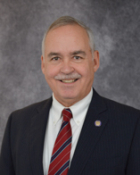
69th Legislative Assembly (2025-26) Introduced by Brad Bekkedahl and 5 co-sponsors

SB 2225 would have created a one-time Dept. of Commerce grant program to fund housing-related infrastructure and blight removal with local matching funds; not enacted.

Second reading, failed to pass, yeas 20 nays 26
0
WeVote Research Nonpartisan
Bill Summary · SB 2225

SB 2225 — Summary (Sixty‑ninth Legislative Assembly, North Dakota)

Status: Conference committee report rejected (did not become law)

Sponsors: Sen. Brad Bekkedahl (primary); Reps. Mike Nathe, Scott Meyer, Emily O’Brien; Sens. Terry Wanzek, Jon O. Nelson (co‑sponsors)

Introduced: March 11, 2025

Purpose

SB 2225 would create a one‑time grant program administered by the Department of Commerce to help communities lower infrastructure costs and remove/remediate slum and blight in order to support construction of affordable, market‑rate housing. The bill includes an appropriation (amount varied through amendments), matching‑fund requirements, reporting to the Legislative Management and governor, and an emergency clause for immediate effect if enacted.

Key provisions (original / principal features)

  • Appropriation from the Strategic Investment and Improvements Fund for grants to political subdivisions to build infrastructure necessary to support housing and for slum/blight removal and remediation. The program period would run from the bill’s effective date through June 30, 2027; funding is treated as one‑time.
  • Eligible applicants: political subdivisions; later amendments explicitly allowed tribal entities and economic development corporations to participate/cooperate.
  • Department of Commerce must establish program guidelines, allow communities to identify needed housing types, and may limit funding for projects converting existing lots until at least one new home obtains a certificate of occupancy (in certain amended versions).
  • Reporting: Department must report to the Legislative Management and the governor by June 30, 2026 on expenditures, number of housing units supported, applicants, and matching funds raised.
  • Emergency clause: bill is declared an emergency measure.

Matching funds and award limits (evolution across versions)

Because the bill was amended multiple times in committee and conference, amounts and match rules changed. Notable formulations include:

  • Original (Introduced / First Engrossment): $50,000,000 appropriation; state funds spent only to the extent matching funds secured on a dollar‑for‑dollar basis. Matching required to be derived equally from: (a) political subdivision funds, (b) local developers, and (c) private funds from within the community (local development corporations, donations, in‑kind).

    • Allocation by community size: $10M (<5,000 pop); $20M (5,001–20,000); $15M (>20,000); $5M for rural metropolitan areas within 20 miles of a >20,000 city center.
    • Maximum award for >20,000 communities: $1,500,000.
  • House amendments and subsequent conference drafts reduced the appropriation in various iterations (examples: $30M, $25M, $5M) and adjusted allocations:

    • Example House version: $30,000,000 total with $6M (<5,000), $12M (5,001–20,000), $9M (>20,000), $3M rural metro; maximum grant $1,000,000.
    • Another conference draft: $25,000,000 total; matching changed to require two‑thirds nonstate funds (i.e., Dept. may spend up to one‑third of total project costs) — reversing from dollar‑for‑dollar to a 1:2 state:nonstate ratio.
    • A separate conference engrossment substantially narrowed scope to a $5,000,000 “community property improvement” grant focused on slum/blight remediation and limited to communities under 4,500 population.

Because multiple competing amendments were offered, the final allocation and match rules depended on which version would have been adopted.

Who would be affected

  • Department of Commerce — program administration, guideline development, reporting.
  • Political subdivisions (cities, counties) — primary applicants/recipients.
  • Tribal entities, economic development corporations, local developers, and private donors — eligible partners and sources of required matching funds.
  • Communities of varying sizes — program design prioritized allocations by population tiers; small and mid‑sized communities were explicitly targeted in many versions.
  • Local property owners and neighborhoods — beneficiaries of slum/blight remediation and new infrastructure enabling housing development.

Timeline & procedure

  • Introduced March 11, 2025. Passed the Senate and was amended in the House. Multiple committee and floor amendments followed.
  • Conference committee was appointed to reconcile House and Senate differences. Conference committee reported back, but the conference committee report was rejected (May 1, 2025). As of that rejection, the bill did not become law.
  • If enacted, the program funding would have been available until June 30, 2027; the Department’s progress report was due June 30, 2026.

Potential impacts and considerations

  • Intended benefit: lower community infrastructure costs and accelerate housing supply, especially in small and medium communities; provide targeted slum/blight remediation.
  • Implementation challenges: securing local matching funds (dollar‑for‑dollar or two‑thirds nonstate), administrative capacity at the Department and local governments, short project timeline (must commit funds by Dec 31, 2026 in many versions), and equity implications of allocation tiers.
  • Because the conference committee report was rejected, none of the proposed funding or programs took effect. Future action would require revised legislation or renewed conference agreement.

Compiled from official sources — confirm details with the bill’s official record.

Sign in to ask a question.