

WeVote

Bill

Bill

S 4640

9–8–8 Connect Act

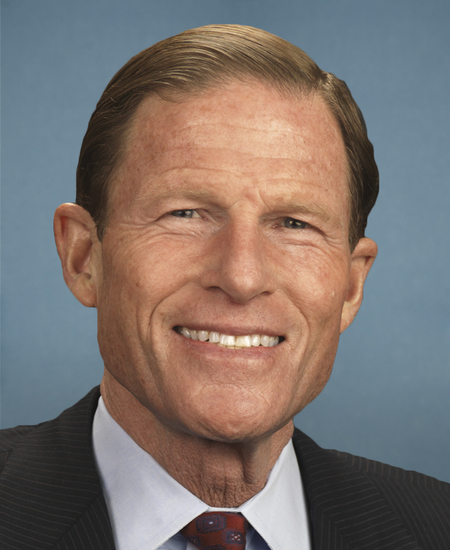
119th Congress Introduced by Richard Blumenthal and 5 co-sponsors

The bill funds follow-up care for 9-8-8 users and requires nationwide, privacy-protected transmission of 9-8-8 calls/texts and system upgrades.

Introduced in Senate
0
WeVote Research Nonpartisan
Bill Summary · S 4640

Overview

The 9-8-8 Connect Act (S. 4640, 119th Congress) aims to strengthen suicide prevention and crisis response in the United States by funding follow-up services through crisis centers and by improving accessibility and integration of the 9-8-8 national crisis line. Introduced May 21, 2026, the bill is sponsored by Sen. Padilla with several Republican and Democratic co-sponsors.

Main purpose and intent

  • Expand funding for follow-up services for individuals who contact the 9-8-8 Suicide and Crisis Lifeline, ensuring ongoing support after initial crisis intervention.
  • Improve the nationwide accessibility, interoperability, and configuration of the 9-8-8 system within the broader communications framework, including multi-line telephone systems and coverage for non-service-initialized handsets.
  • Establish clear privacy, consent, and non-coercive standards for follow-up services to protect individuals’ rights.

Key provisions

  1. Grants for follow-up services (Public Health Service Act, Title V)

    • Create new Section 520E–5 to authorize grants to eligible crisis centers.
    • Eligible centers must be part of the national crisis center network coordinated under 520E–3(b)(1).
    • Grants awarded based on relative needs, capacity, and service gaps among applicants.
    • Funds may be used to provide follow-up services to individuals who directly contact 9-8-8 and are identified as at risk.
    • Follow-up services can include:
      • Check-ins to assess well-being and risk.
      • Outreach to ensure engagement in services, including coordination with mobile crisis providers.
      • Collaboration with family, caregivers, and natural supports.
      • Referrals aligned with level of care needed.
    • Technical assistance provided by the Secretary to grant recipients.
    • Privacy and consent framework: follow-up services may only be provided with informed consent; disclosure and consent must be clearly explained; no sharing of personally identifiable information without consent, except as required by law.
    • Prohibits coercive interventions; ensures privacy protections and non-coercive engagement.
    • The Secretary must issue model national standards for consent and privacy within one year of enactment.
    • Authorization of appropriations: $30 million for fiscal year 2026, available until expended.
  2. 9-8-8 Improvement (Communications Act and related provisions)

    • Defines 9-8-8 and related terms (e.g., commercial mobile service, non-service-initialized handset).
    • Transmission of all calls and texts to 9-8-8: FCC must promulgate rules within 270 days to ensure all providers transmit calls/texts to 9-8-8, including non-service-initialized handsets, if compatible. Implementation required within 1 year after regulations are promulgated.
    • Multi-line telephone systems configuration: Amendments to Section 721 of the Communications Act to enable 9-8-8 in addition to 9-1-1, with applicability to actions after two years unless hardware/software upgrades are not feasible without improvements.

Who is affected

  • Individuals seeking crisis intervention and suicide prevention via 9-8-8 may receive structured follow-up services.
  • Crisis centers participating in the national network and eligible to receive grants.
  • Providers of commercial mobile service and organizations managing multi-line telephone systems, which must update systems to support 9-8-8 communications.
  • The Federal Communications Commission (FCC) and the Secretary of Health and Human Services (via the Office) will implement rules, guidance, and grant administration.

Procedural and timeline notes

  • Enactment triggers grant program development and standards within the Secretary’s oversight, with model consent/privacy standards due within 1 year.
  • Grants authorized for FY2026 at $30 million, ongoing availability.
  • FCC and communications-related actions have deadlines: 270 days to issue regulations for 9-8-8 call/text transmission; full implementation within about 1 year after regulation.

Potential impact

  • Improved continuity of care for individuals in crisis through structured follow-up, potentially reducing repeat crises and improving engagement with services.
  • Greater nationwide reliability and reach of 9-8-8 communications, enhancing access for diverse users, including those with non-traditional handsets.
  • Stronger privacy protections and clear consent processes to safeguard individuals’ information.

Compiled from official sources — confirm details with the bill’s official record.

Sign in to ask a question.