

Bill

BILL • US HOUSE

HR 8102

Workforce Investments Accountability Act

119th Congress
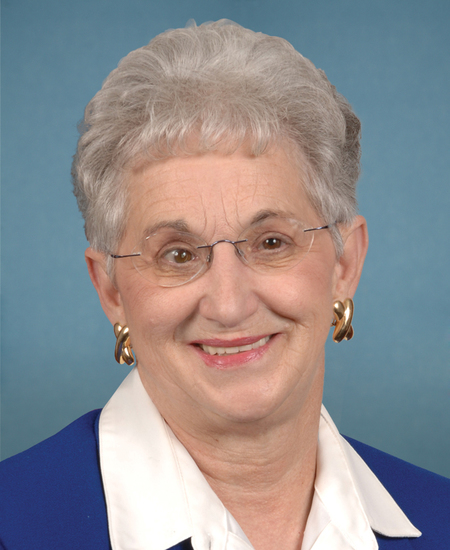
Introduced by Virginia Foxx,

Strengthens WIOA accountability by tying funding to performance outcomes, expanding reporting, and sanctioning underperforming states and local areas.

Introduced in House
0
0
Bill Summary • HR 8102

Summary of H.R. 8102 — Workforce Investments Accountability Act

Session: 119th Congress | Introduced March 26, 2026 | Jurisdiction: United States (House)

Primary sponsor: Ms. Foxx (Co-sponsor: Virginia Foxx)

Date and status: Referred to the House Committee on Education and Workforce. This summary explains the bill’s main purpose, key provisions, affected parties, and timelines.

1) Purpose and Intent

  • The bill aims to strengthen the performance accountability system under the Workforce Innovation and Opportunity Act (WIOA) and to dedicate funding toward skills development.
  • It seeks to raise performance transparency, improve state and local accountability, and increase investment in workforce training for adults, dislocated workers, and individuals with barriers to employment.

2) Key Provisions and Changes

A. State Performance Accountability Measures (Section 2)

  • Modifies primary indicators of performance in WIOA Section 116(b)(2)(A) to place greater emphasis on post-exit outcomes and on-the-job training/internships, and to align education credentials with modern expectations.

    • Substantive changes to multiple subclauses:
    • Adjusts the timing reference from “fourth quarter after exit” to “second” (and related timing adjustments).
    • Updates education credentials from “secondary school diploma” to “regular high school diploma.”
    • Expands performance metrics to cover transitions into education/training and post-exit employment, with new language around training outcomes and on-the-job experiences.
    • Adds a new metric: the share of program participants who completed a work experience prior to exit (section 2(a)(1)(B)(iv)).
  • Adjusts performance level setting (Section 2(a)(2)):

    • State plans must propose expected performance levels for each primary indicator and publish the statistical model and methodology publicly.
    • States evaluate the proposed levels and may counterpropose, including state-specific analyses. The State Plan must include proposed levels, any counterproposals, and the agreed-upon levels (after consideration of state-specific factors).
  • Updates related provisions for state plan content, evaluation, and incorporation of counterproposals (Section 2(a)(2)(B)).

B. Performance Reporting (Section 2(b))

  • Establishes templates for performance reporting within 12 months of enactment; emphasizes standardized, comparable data across core programs and providers.
  • Requires more uniform data elements and privacy protections; allows optional additional data as needed for reporting purposes and to avoid undue burden.
  • Explicit access to quarterly wage records for local areas (with privacy protections) to support wage-based outcomes reporting.
  • Expanded reporting content for eligible providers, including demographic and barrier-to-employment disaggregation, cost-per-participant, median earnings gains, and postsecondary credentials.

C. Evaluation and Data Analytics (Section 2(c))

  • Requires states to use data-driven analyses to assess program operations and outcomes, permitting advanced analytics (e.g., machine learning) to improve performance evaluation.

D. Sanctions and Accountability (Section 2(d) and 2(e))

  • Introduces financial sanctions and corrective actions if states fail to meet performance measures:
    • If a state fails to meet 80% of a state-adjusted performance level for an indicator, a targeted support plan is required; failing to meet certain conditions can trigger reductions in reserved funds and fund recapture.
    • A broader set of sanctions applies if overall performance scores fall below thresholds (90% of state-adjusted levels), including technical assistance and potentially more severe funding reallocation or state-level adjustments.
    • Creates consequences for local areas failing to meet local performance measures, including corrective actions and potential restructuring of local boards or redesignation/merger of local areas.

E. Funding for Skills Development (Section 3)

  • Amends the minimum use of local workforce funds to require that at least 50% of funds described in subparagraph (A) be used to pay for training services:
    • For adults and dislocated workers under specified program paragraphs (3)(F)(iii) and (3)(G)(ii).

F. Administrative and IT/Privacy Provisions (Various sections)

  • Updates responsibilities for data matching, privacy protections, and the designate-state-agency role to assist with performance reporting.
  • Creates a designated state agency to coordinate reporting, data validation, and privacy safeguards.
  • Requires the Secretary of Labor and Secretary of Education to implement the new accountability measures within 12 months of enactment and to notify state agencies of requirements.

3) Who Is Affected

  • States and their Workforce Development Boards
  • Local Workforce Development Areas and One-Stop Operators
  • Eligible Providers of Training Services (training providers listed under WIOA §122)
  • Employers and jobseekers participating in core programs (Adult, Dislocated Worker, Youth programs)
  • State and local education and labor agencies responsible for reporting, data matching, and program administration

4) Timelines and Implementation

  • Performance accountability measures take effect: full implementation targeted within 12 months after enactment (Section 2(g)/(k)).
  • Templates and standardized reporting must be developed or updated within 12 months after enactment (Section 2(b)(1)).
  • States must propose and publish performance levels in their State Plans on a schedule tied to the plan years (as described in 116(b)(3)(A)(iii)).
  • Implementation of wage-record data access and privacy protections to support reporting is phased in, with state-designated agencies responsible for data matching and validation (Section 2(h)).

5) Potential Impacts

  • Greater emphasis on measured outcomes after program exit, earnings gains, and work-based training experiences.
  • Increased transparency and accessibility of state and local performance data, including multi-language formats and digital access.
  • Higher accountability for states and local areas through sanctions, corrective actions, and potential fund reallocations.
  • Increased investment in training services (minimum 50% of certain funds) to emphasize direct skills development.

Note: This is a summary of the bill’s substantive elements based on the text provided. Final outcomes depend on committee amendments, floor action, and enacted law.

Hi! I'm your AI assistant for HR 8102. I can help you understand its provisions, impacts, and answer any questions.

Key Provisions Impacts Timeline
Sign in to chat

Start the Conversation

Be the first to share your thoughts on this petition. Your voice matters!

Share your opinion above