Summary — H.R. 1724: No Dollars to Uyghur Forced Labor Act
Status and procedural history
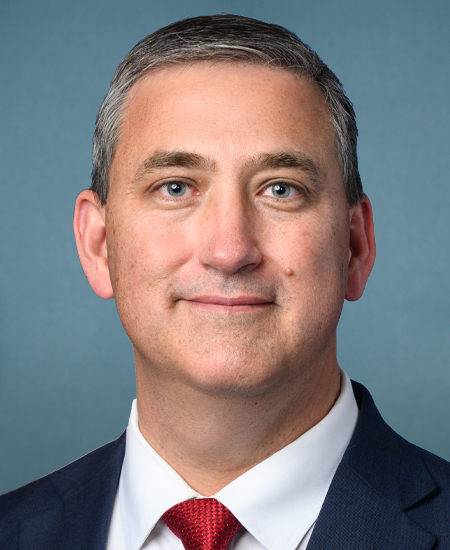
- Introduced in House (Rep. Nathaniel Moran) — Feb 27, 2025.
- Referred to House Committee on Foreign Affairs (Feb 27, 2025).
- Passed House under suspension of the rules, as amended (voice vote) — May 5, 2025.
- Received in the Senate, read twice, and referred to the Senate Committee on Foreign Relations — May 6, 2025.
Purpose
- To prohibit the use of U.S. Department of State and U.S. Agency for International Development (USAID) funds for activities that knowingly use goods mined, produced, or manufactured wholly or partly in the Xinjiang Uyghur Autonomous Region (XUAR) of China or goods produced by certain designated entities (so‑called “covered entities”), with limited, specified exceptions.
Key provisions
- Broad prohibition (sec. 2(a)): No State Department or USAID funds may be used to develop, design, plan, promulgate, implement, or execute a policy, program, or contract that knowingly uses goods (mined/produced/manufactured wholly or in part in XUAR) or goods produced by a covered entity — unless specifically authorized.
- Limited waiver/authorization (sec. 2(b)): The Secretary of State may specifically authorize an otherwise prohibited activity only if:
- a written assurance is obtained from the partner/implementor/contractor that (i) it will not use XUAR‑origin goods with respect to the program and (ii) it will develop a system to ensure compliance; and
- the Secretary provides notice to the Chairs and Ranking Members of the House Foreign Affairs Committee and Senate Foreign Relations Committee at least 15 days before authorizing the activity.
- Reporting (sec. 2(c)): The Secretary must submit an annual report for three years to the two committees describing (1) any prohibited activities carried out in violation of the ban and not authorized, (2) enforcement challenges, and (3) a plan to improve enforcement.
- Definitions (sec. 2(e)):
- “Covered entity” is defined by cross‑reference to entities listed under provisions of Public Law 117–78 (the strategy developed under that law).
- “Forced labor” is defined by reference to section 307 of the Tariff Act of 1930 (19 U.S.C. 1307).
Who or what is affected
- U.S. State Department and USAID programs and contracts (funding recipients, implementing partners, contractors).
- Program partners or contractors that procure goods potentially sourced from XUAR or that are on the “covered entity” list referenced in PL 117–78.
- Potential indirect effects on humanitarian, development, and diplomatic operations that rely on international procurement and supply chains tied to Xinjiang‑origin inputs.
Potential impacts and implementation considerations
- Requires enhanced supply‑chain due diligence and compliance systems for recipients of State/USAID funds.
- May restrict or delay programs where Xinjiang‑origin inputs are present unless the Secretary grants a specific authorization after receiving assurances and providing congressional notice.
- Enforcement relies on internal State/USAID compliance and the three‑year reporting mechanism; practical challenges may include tracing origin in complex supply chains and coordinating with implementing partners.
- Does not establish new criminal penalties; enforcement mechanism is administrative (funding prohibition and reporting).
Limitations and open questions
- “Activity is not otherwise prohibited” and the scope of the “covered entity” cross‑reference to PL 117–78 may require interpretation.
- No effective date is specified beyond enactment; operational details (e.g., implementation guidance) would be set by the agencies.
For further reading
- Full text of H.R. 1724 (Introduced) and cross‑references to Public Law 117–78 and 19 U.S.C. 1307 for the statutory definitions referenced in the bill.