Overview
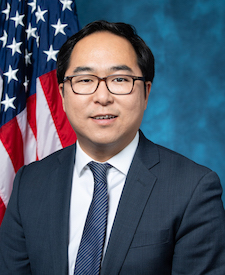
Senate Bill S.4513, introduced May 13, 2026 by Senator Andy Kim, seeks to improve national data on multigenerational caregiving by ensuring that at least one major federal population survey includes a dedicated question identifying multigenerational caregiving. The act is titled the Multigenerational Caregiving Data Act.
Purpose and intent
- Establishes a federal data collection requirement to better identify individuals who provide unpaid care across generations (e.g., to both children and older adults).
- Aims to inform policymaking related to caregiving, labor force participation, and health outcomes by improving the data landscape available to federal agencies.
Key provisions
- Data collection requirement (Section 3):
- Within 3 years after enactment, the Secretary of Commerce (in consultation with heads of relevant federal statistical agencies) must ensure at least one major federal population survey includes a question identifying multigenerational caregivers who provided regular unpaid care in the previous 12 months.
- Flexibility (Section 3(b)):
- The Secretary may adjust wording, response options, or the question’s placement to improve clarity, reliability, respondent burden, and consistency with the chosen survey methodology.
- Testing (Section 3(c)):
- Before full implementation, the responsible agency must conduct cognitive testing and field testing as appropriate.
- Voluntary responses (Section 3(d)):
- Responses to the new question are voluntary.
- Reporting and publication (Section 3(e)):
- Within 2 years of including the question in a major survey, the Secretary must submit a Congress-wide report evaluating data quality, usability, respondent burden, response rates, and identifying which surveys include the question, plus recommendations for expanding, modifying, or discontinuing the question.
- The report must be published on the Department of Commerce’s public website.
- Definitions (Section 3(f)):
- Major Federal Population Survey: includes nationally representative surveys such as the American Community Survey, the Current Population Survey, the National Health Interview Survey, or any successor/similar designated surveys.
- Multigenerational Caregiver: an individual who provides unpaid care to at least two specified groups (e.g., a child under 18, an adult 18–64 with a health condition or disability, or an adult 65+ with a health condition or disability) across generations.
- Secretary: Secretary of Commerce.
Who/what is affected
- Federal statistical agencies responsible for major population surveys (e.g., U.S. Census Bureau, National Center for Health Statistics, CDC).
- The American Community Survey, the Current Population Survey, the National Health Interview Survey, and any designated successor surveys.
- Respondents to these surveys, who may be asked to disclose multigenerational caregiving activities (responses are voluntary).
Procedural and timeline aspects
- Enactment deadline: Not specified beyond “within 3 years after the date of enactment” to implement the question in at least one major survey.
- Testing phase: Cognitive and field testing required prior to full implementation.
- Reporting timeline: A congressionally-referenced report due within 2 years after the question is included in a major survey, followed by public publication on the Department of Commerce website.
Potential impact
- Better visibility into the scope and characteristics of multigenerational caregiving.
- Data to inform policies on caregiving supports, workforce participation, health outcomes, and program design.
- Enhanced ability to assess economic and social costs associated with caregiving across generations.
Note: The bill emphasizes data quality, respondent burden, and transparency in how the new data would be collected and used.



Start the Conversation
Be the first to share your thoughts on this petition. Your voice matters!